Practical example

AI flashcard set for IT security: promoting independent learning

Teachers
Prof. Ralf C. Staudemeyer, PhD
Last update
University(s)
Subject group(s)
Target group(s)
Format | Mode

|

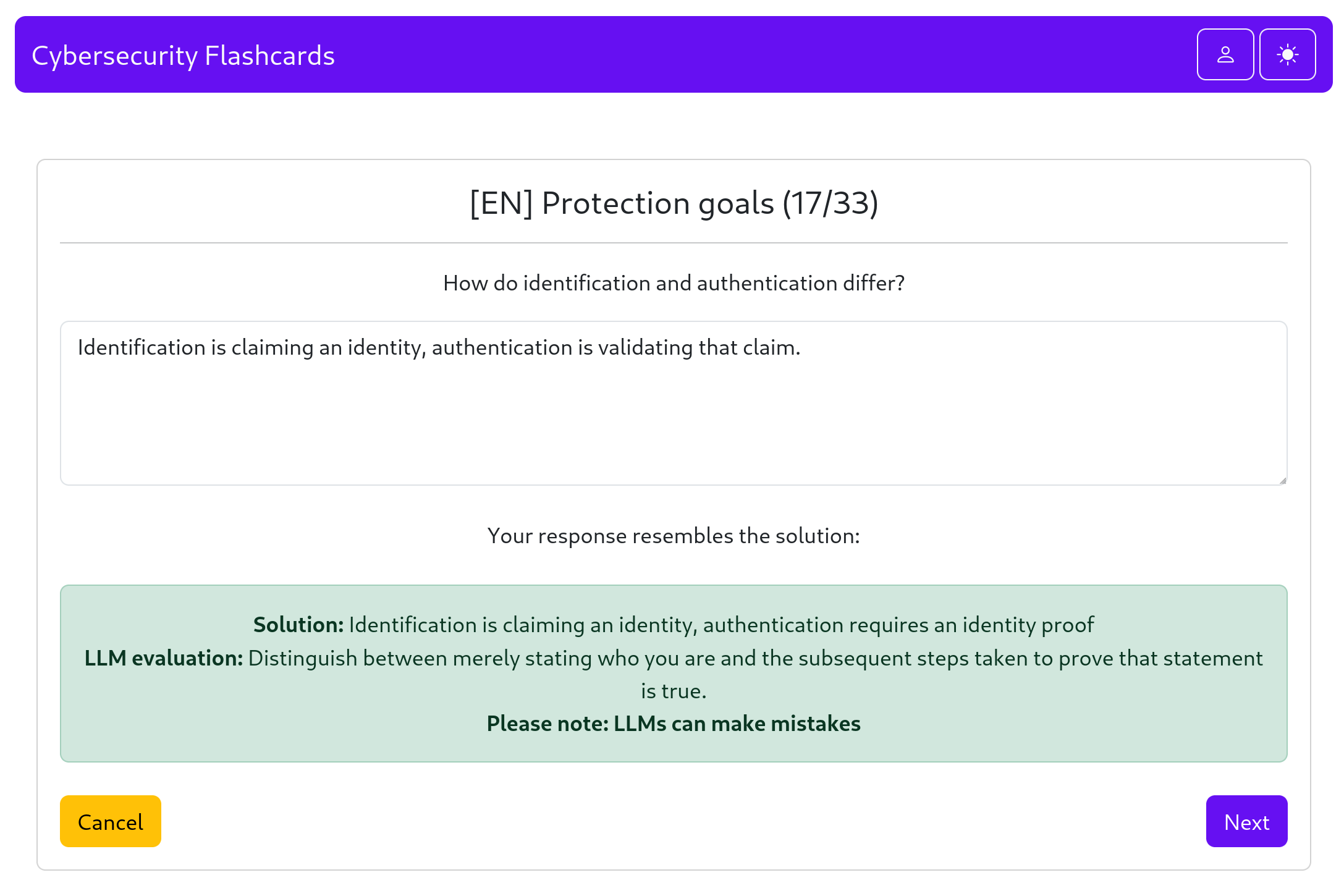
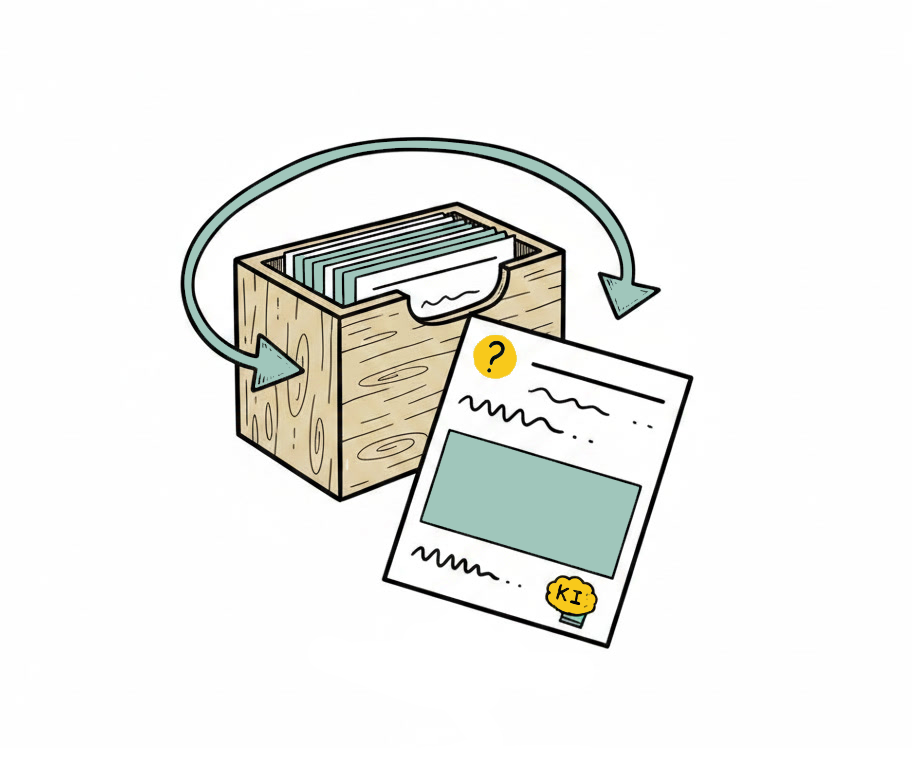
The IT Security course is supplemented by a digital, artificial intelligence (AI)-supported flashcard system. This contains questions on the topics covered in the lectures. The answers formulated by students are semantically compared with the provided model answer using SentenceTransformers (algorithms for comparing the content of sentences). An LLM (Large Language Model; a language model for machine-generated text) also provides specific feedback on the proposed solutions. Gamification elements integrated into the flashcard system (e.g. badges and high-score lists) boost motivation and thus enhance students’ learning outcomes. The fact that the flashcard box is available as a web application enables location-independent learning at a time of the student’s choosing, without having to forego immediate, personalised feedback.
Thanks to lightweight AI algorithms, the flashcard system can run independently without the need for specialised hardware. The source code is freely available under an open-source licence, and the questions are stored in an easy-to-understand, structured format. This makes it easy to adapt the flashcard system to other subject areas.


The challenge of teaching

In the field of IT security, a knowledge of specialist terminology is essential for developing a thorough technical understanding. As many students find it difficult to grasp more complex terms on their own, the AI flashcard system offers an effective solution: it enables students to learn technical terms in a targeted manner and receive immediate feedback when they make mistakes.

Goals of your practical example

The main aim is to improve students’ ability to acquire skills independently in the field of IT security. The flashcard system promotes this by encouraging students to formulate their own answers to open-ended questions in a free-text field. They receive direct, personalised feedback based on a comparison of their answers with the model answer. This strengthens their understanding and ability to apply the course content. Gamification elements boost motivation and learning outcomes. The digital availability of the course as a web application improves accessibility and enables more flexible learning.

Prerequisites for implementation

The AI card index requires access to a web server. As lightweight AI algorithms are used to compare content, there are no specific hardware requirements. The Open Model Lab from the e-Teach network can be integrated as an LLM.

Procedure

Initially, the flashcard box was developed as a web application. The AI algorithms were then integrated, and the flashcard system was trialled in a course. Statistical analysis of the exam results showed that students who used the flashcard system scored, on average, around ten marks higher than their fellow students who did not use it.

Related practical examples

Related teaching concepts

Teaching concepts by keywords

Your suggestion or question

We hope that the practical examples will be viewed critically, utilised and developed further and thus remain alive. Therefore, please use the comment function to give your assessment of this practical example. Share your experiences in the implementation or refer to similar didactic methods (please include references or links). 

Your assessment will first be checked by us and then approved.

Leave a Reply

Your email address will not be published. Required fields are marked *

Contact person for the teaching concept

Bild von Claudia Hoffmann

Claudia Hoffmann

Contact us

Selection of topics