The blended learning units provide students with an in-depth introduction to the topic of German colonialism using archive material. The focus is on childhood, education and educational institutions in former German South West Africa. At the same time, the historical events and developments are analysed with regard to their significance for ...
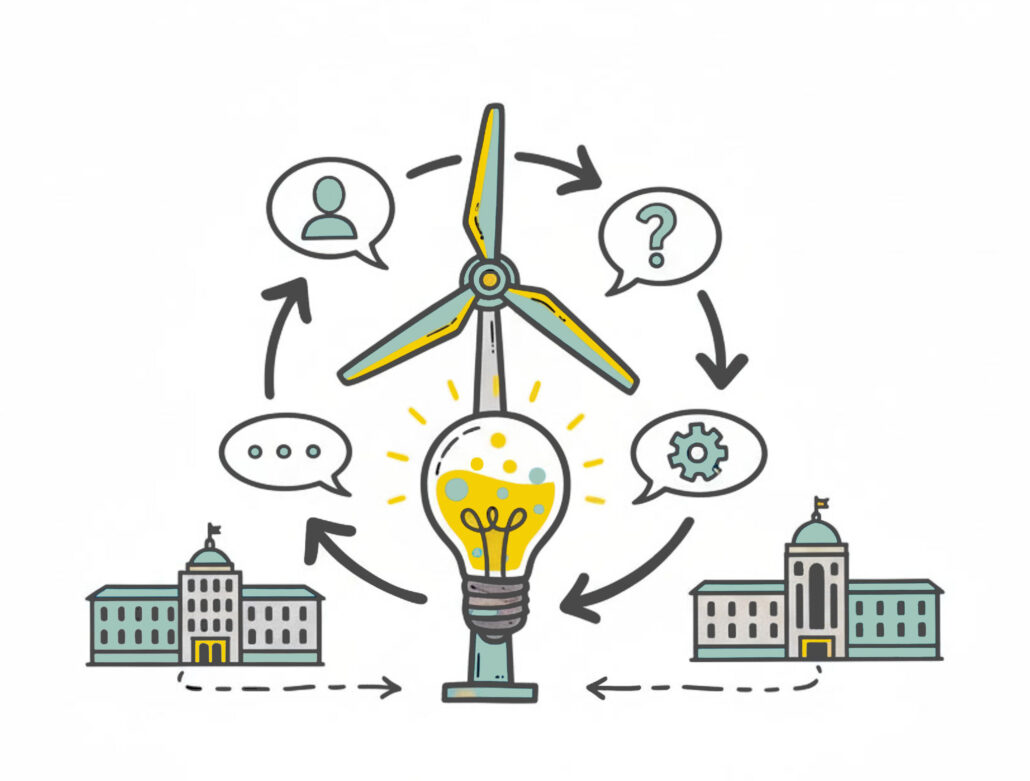
In the project „Interdisciplinary innovation in energy research - further development of a module into a cross-university course“, the course Energy Research and Innovation Methods 2 at the TU Ilmenau was to be further developed into a cross-university course. This practical example describes what is involved in the ...
The Master's seminar focuses on a mission design for autonomous systems (e.g. robots, probes) according to a given objective. Ideally, it is motivated by national/ international tenders or competitions, e.g. REXUS/ BEXUS of the DLR. The core is the project planning for the realisation of the system ...
The "Scientific Instrumentation" degree programme has a relatively large student cohort of 90-115 students. In order to enable all students to work with the scanning electron microscope (SEM) in the "Physical Materials Diagnostics" module, the implementation as an online practical course (a solution from ...
Peer instruction units are short units lasting approx. 10 minutes that are carried out once or several times during a lecture. The starting point is a multiple-choice question that is addressed to the students via the projector. Typically, this is a comprehension question about the ...
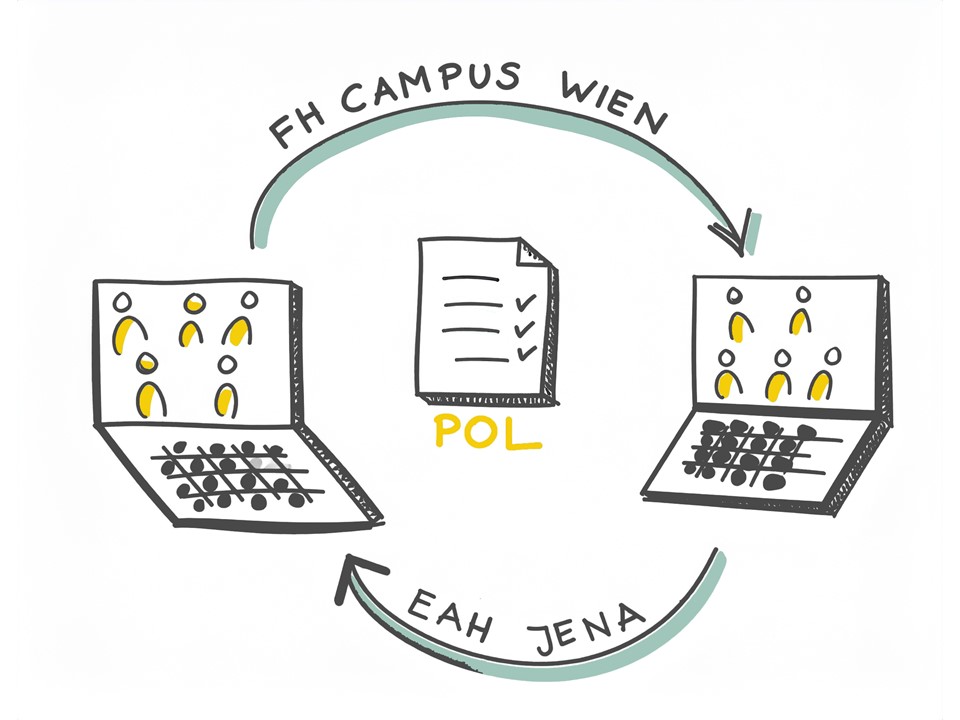
Together with the FH Campus Wien, a three-hour seminar unit was developed for purely digital implementation in the field of health and care. The basis is the Problem-Oriented Learning (POL) method, so that students can successfully transfer theoretical knowledge into practical knowledge. The method ...
Even the communication of a teacher's understanding of their role can make a decisive contribution to a learner-orientated form of academic education. In the role of a learning coach, a learning facilitator, the teacher hands over part of their responsibility to the students. From now on, it is their task to ...
In small and medium-sized groups, a quick form of evaluation can be carried out efficiently using two symbols. A stone and a light are positioned in the room. Students are given three to five minutes to reflect on the course as it draws to a close. ...