Practical example

LEGO Technic in the world of mechanisms and gear systems

Teachers
Dr Stefan Griebel, Eng.
Last update
University(s)
Subject group(s)
Target group(s)
Format | Mode

|

As part of this practical example, traditional topics in mechanism and gear technology are taught in a clear and hands-on manner through the use of LEGO Technic. To this end, demonstration set-ups are constructed, each featuring a central drive and different types of gearing. Students analyse selected sub-gearboxes constructed from LEGO bricks by manually testing them as illustrative models during the lecture and then independently rebuilding them in the seminar to investigate how they work. The aim is to make abstract representations and interrelationships in gear technology more comprehensible through hands-on experience.


The challenge of teaching

Abstract concepts in mechanism and gear technology are often difficult for students to grasp. In particular, understanding the relationships between movements, degrees of freedom and transfer functions is difficult without clear models. The lack of practical and applied relevance also makes it harder for students to engage actively with the course content.

Goals of your practical example

The aim of this practical example is to engage students and facilitate the long-term acquisition of skills in the field of mechanism and gear technology. By engaging students through the hands-on construction and understanding of gear structures, a practical approach to theoretical content is established.

The focus is on developing students’ analytical skills and technical visualisation skills. Furthermore, students are enabled to independently investigate and evaluate kinematic relationships (e.g. degrees of freedom, transfer functions and the influence of geometric parameters). Working in small groups also promotes professional exchange and collaborative problem-solving.

Prerequisites for implementation

To carry out the practical example, suitable Lego Technic components and demonstration models are required, as well as sufficient time for the design, construction and testing of the models. In terms of content, a basic understanding of mechanism and gear technology is necessary so that students can analyse and discuss the models. In terms of facilities, a lecture theatre or seminar room is required that allows for practical activities and group work. It is also advisable to have storage and transport facilities for the Lego sets and demonstration set-ups. Staff support, for example from student assistants, is also helpful for supervising and further developing the models.

Procedure

As part of the practical example, suitable Lego Technic components were first purchased. Demonstration set-ups were then designed and constructed to clearly illustrate typical mechanisms and gearboxes. These models were subsequently incorporated into the lectures and seminars. The students analysed individual sub-gears in terms of function, degrees of freedom and transmission behaviour, and independently replicated selected mechanisms. Through practical work in small groups, technical concepts were brought to life through hands-on experience, whilst discussion, problem-solving and active learning were encouraged.

Material for the practical example

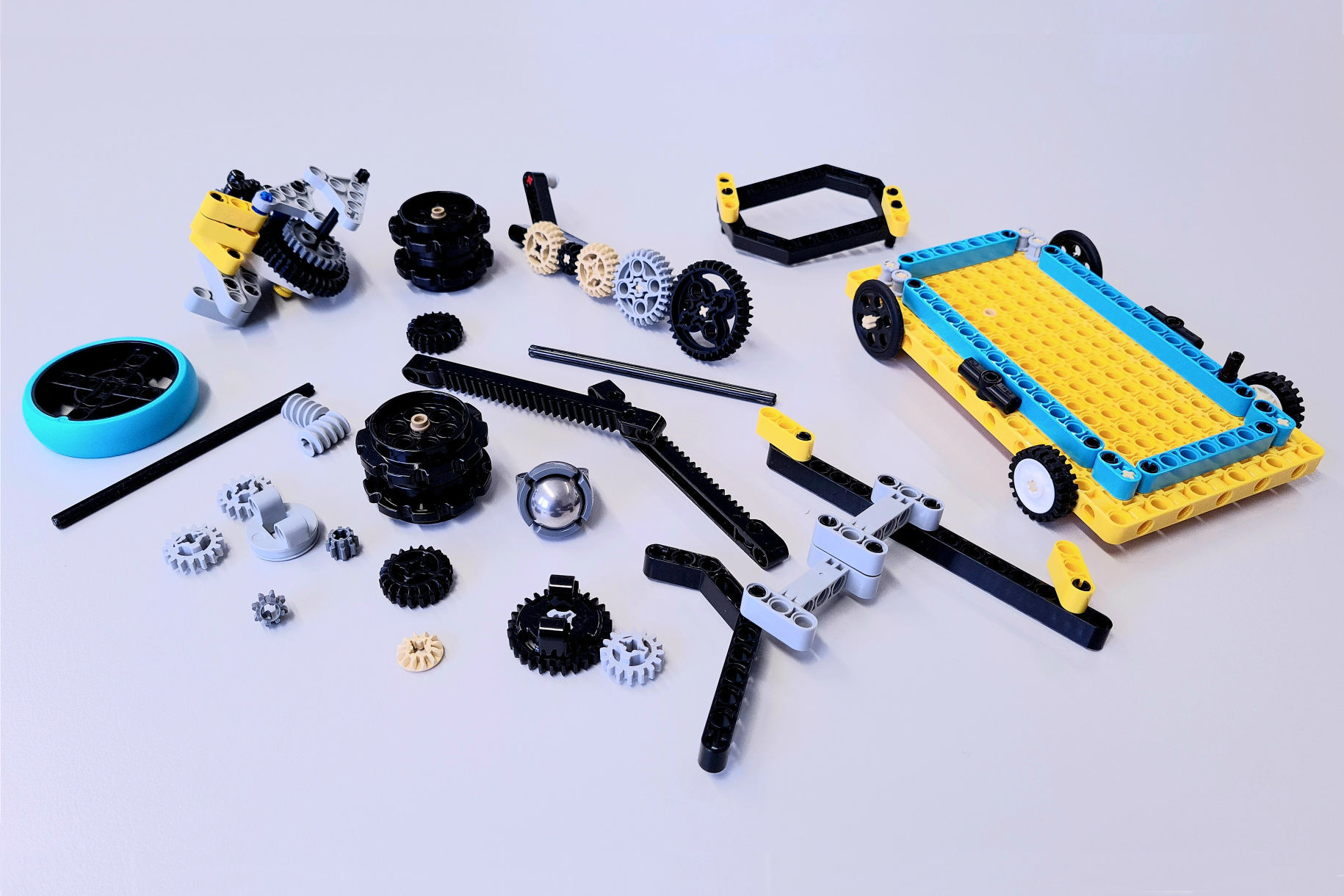
(1) LEGO Technic building sets / individual parts from the LEGO Education range are recommended
– Gears (various ratios)
– Axles, connectors, frames
– Crank, lever, perforated rods
– Base plates

(2) Motors (if manual operation, e.g. via cranks, is not required)
– simple drive systems for demonstration models (e.g. motor and battery modules from Circuitcube https://circuitcubes.com/): no programming required for these
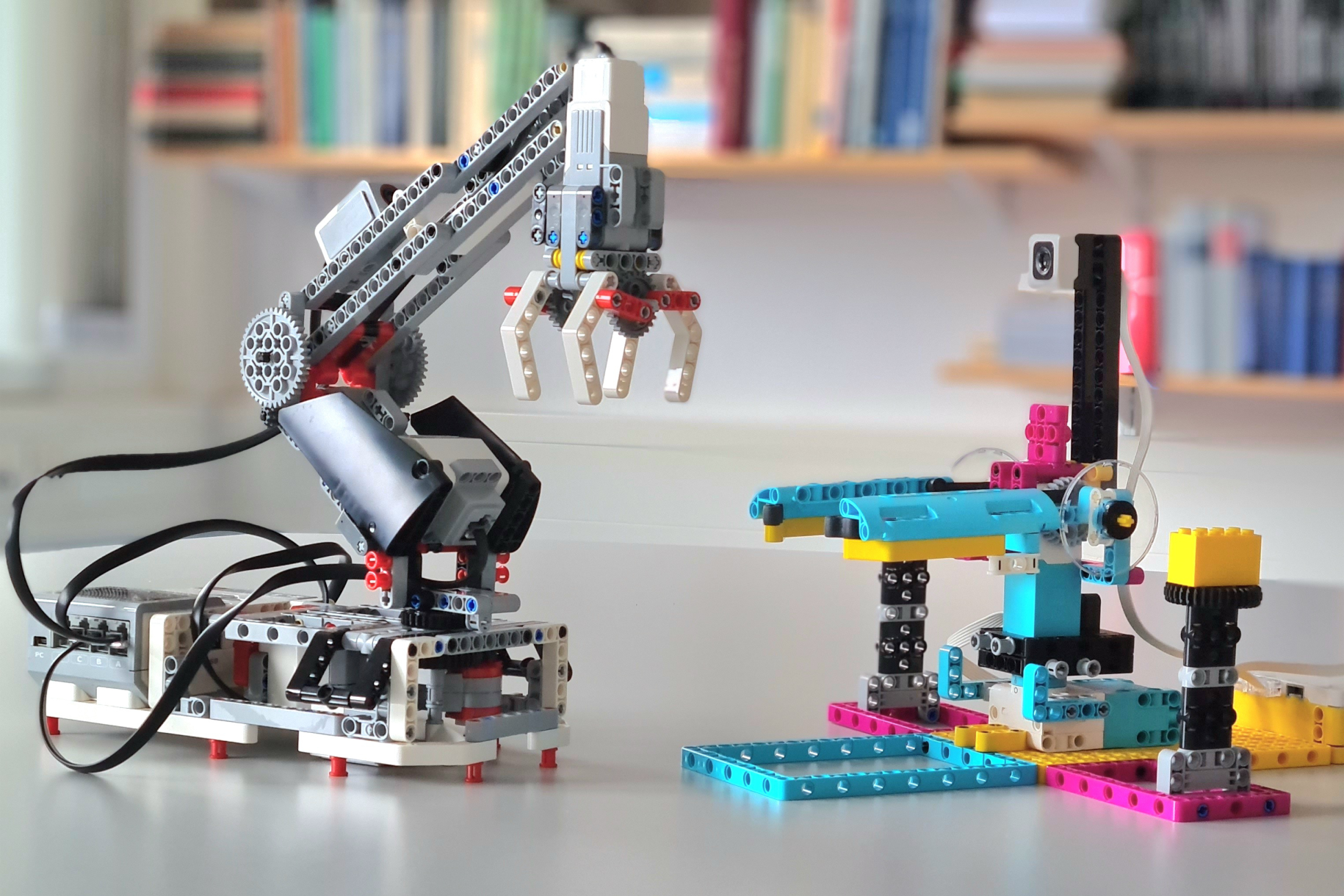
– LEGO Technic motors: these require, for example, modules from LEGO Education Spike Prime for easy control
– LEGO Technic EV3 for advanced programming; please note (support was discontinued in 2020/21), but plenty of educational resources are available online

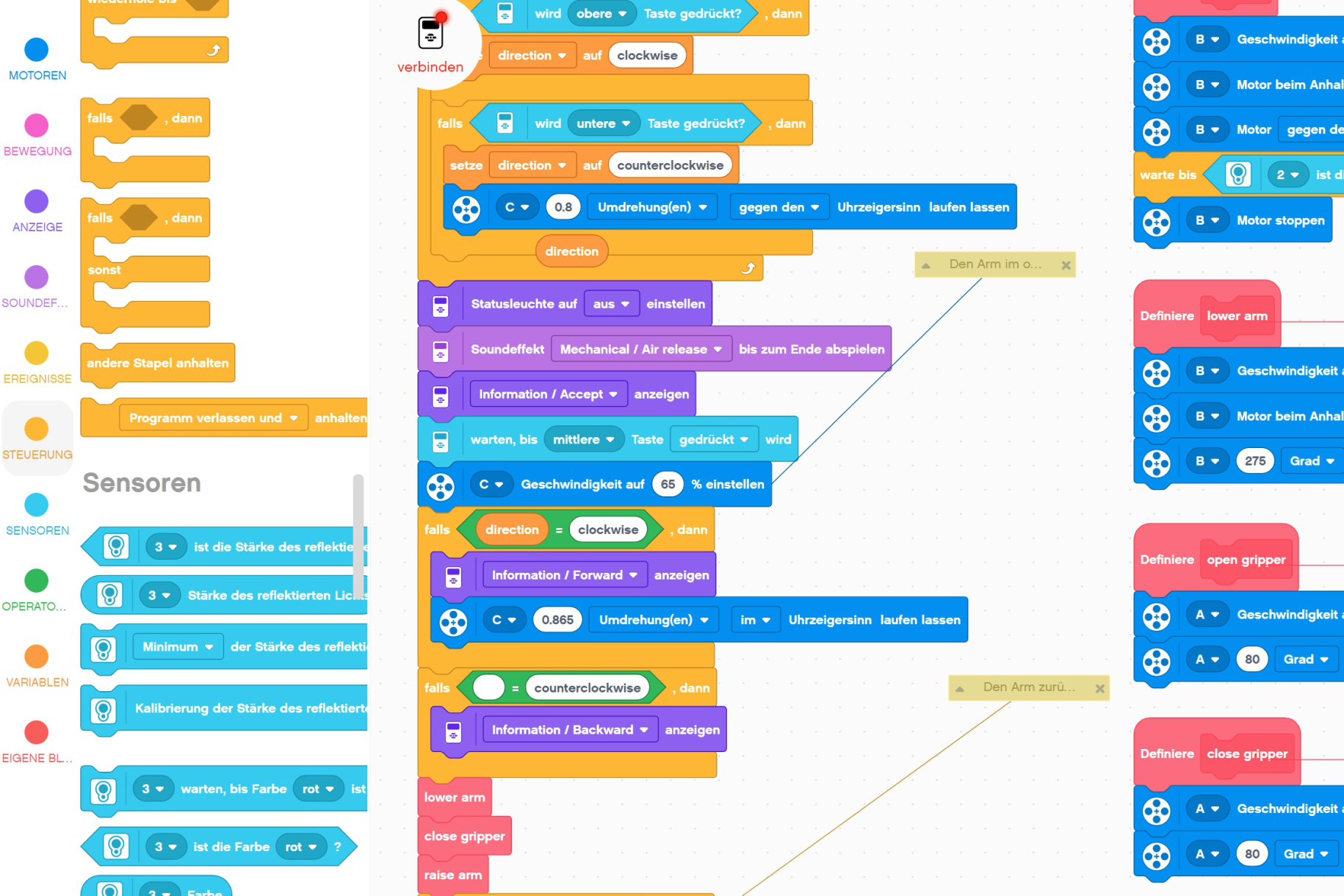
(3) Programming
– PCs / laptops
– Software available at https://education.lego.com/de-de/downloads/

(4) Special parts for gearboxes and mechanical components
e.g. differential, worm gear, spur gear

Lego Technic kit
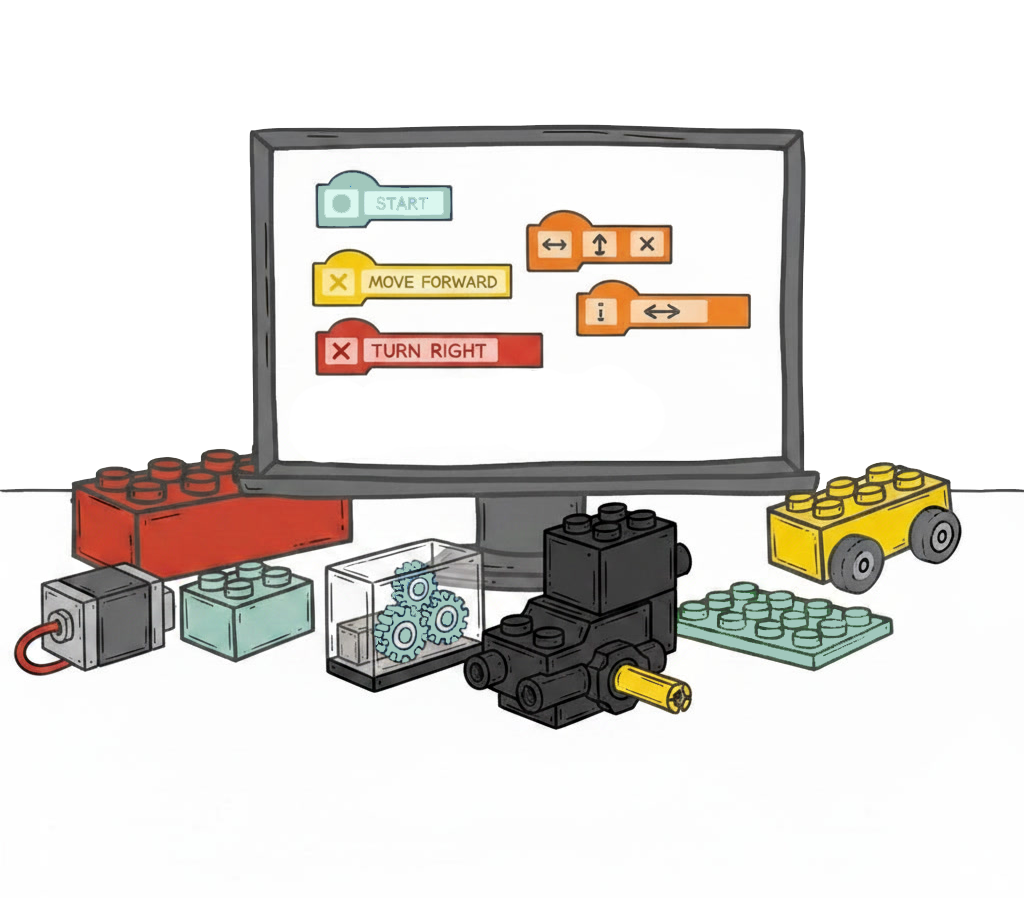
An Introduction to Programming
ready-made demonstration models

Your suggestion or question

We hope that the practical examples will be viewed critically, utilised and developed further and thus remain alive. Therefore, please use the comment function to give your assessment of this practical example. Share your experiences in the implementation or refer to similar didactic methods (please include references or links). 

Your assessment will first be checked by us and then approved.

Leave a Reply

Your email address will not be published. Required fields are marked *

Contact person for the teaching concept

Bild von Claudia Hoffmann

Claudia Hoffmann

Contact us

Selection of topics