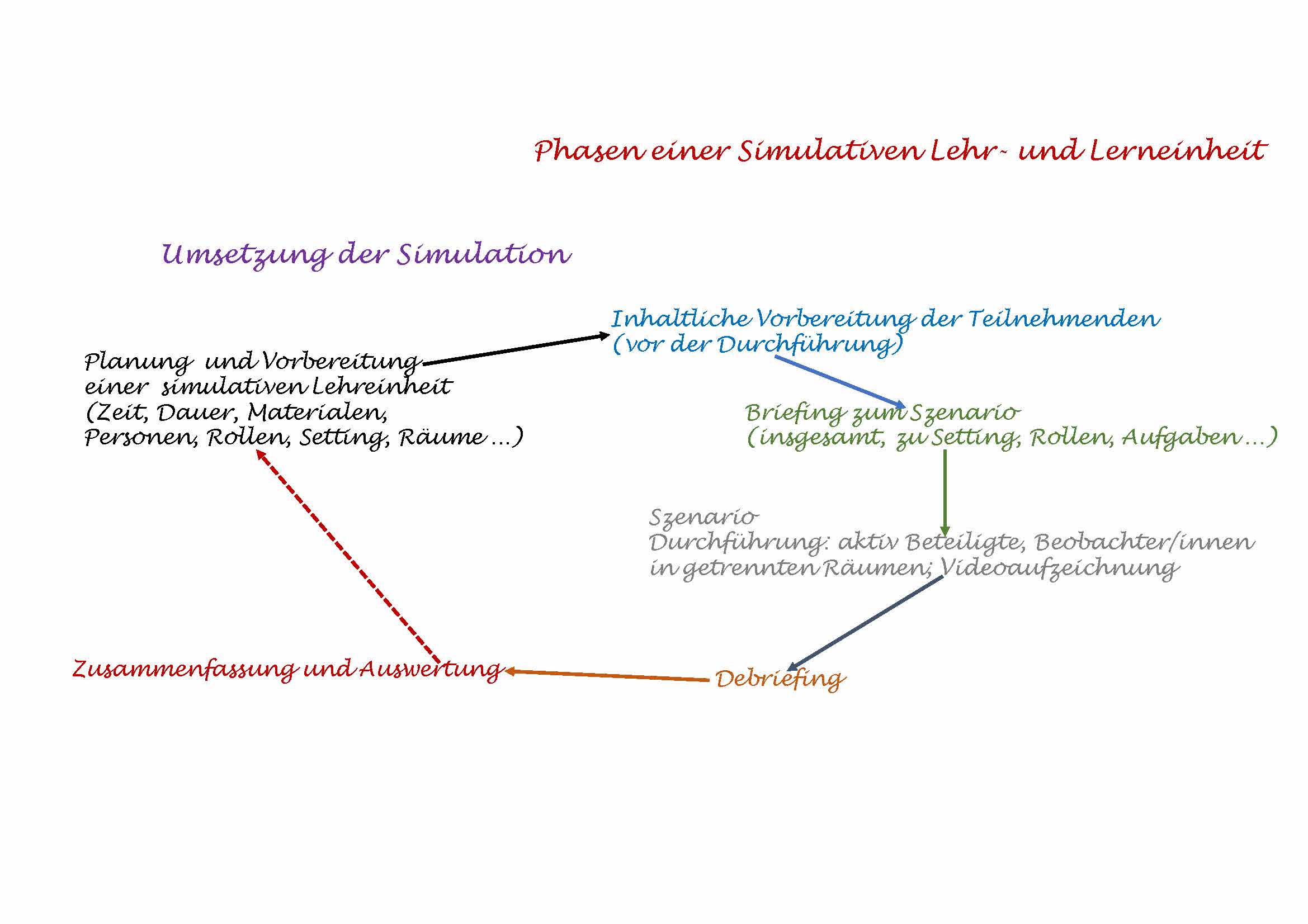
From the thematic framework of the respective module, content is defined that is to be applied by means of simulative work. These defined teaching and learning situations are worked out by the teachers according to the defined phases (briefing, implementation (scenario), debriefing) of simulative pedagogy:
Learning objectives (2-3 learning objectives, general and specific) are formulated for each learning unit. A „script“ is written for the selected action/situation/procedure in which the setting, the roles, the tasks of the actors and the observers (students of the seminar group) are characterised and developed in more or less detail. This description of the setting also contains developments and variations of behaviour, reactions and actions as measures that (can) occur if, for example, a situation develops away from the planned course of events or an event interferes with the situation (e.g. a complication).
The actors involved in the scenario are prepared according to their roles. Teachers act as instructors. This means that they plan the scenario, control the process and, if necessary, make modifications. During reflection, teachers take on a reserved, accompanying, enquiring, in-depth, moderating role.
The scenario is realised in a setting that reflects reality as closely as possible. This means that the room, people, actions, situations and processes are prepared according to the requirements. Situations are chosen from everyday professional life/context, the students take on roles associated with the situation and act in real time according to the learning objective formulated in advance.
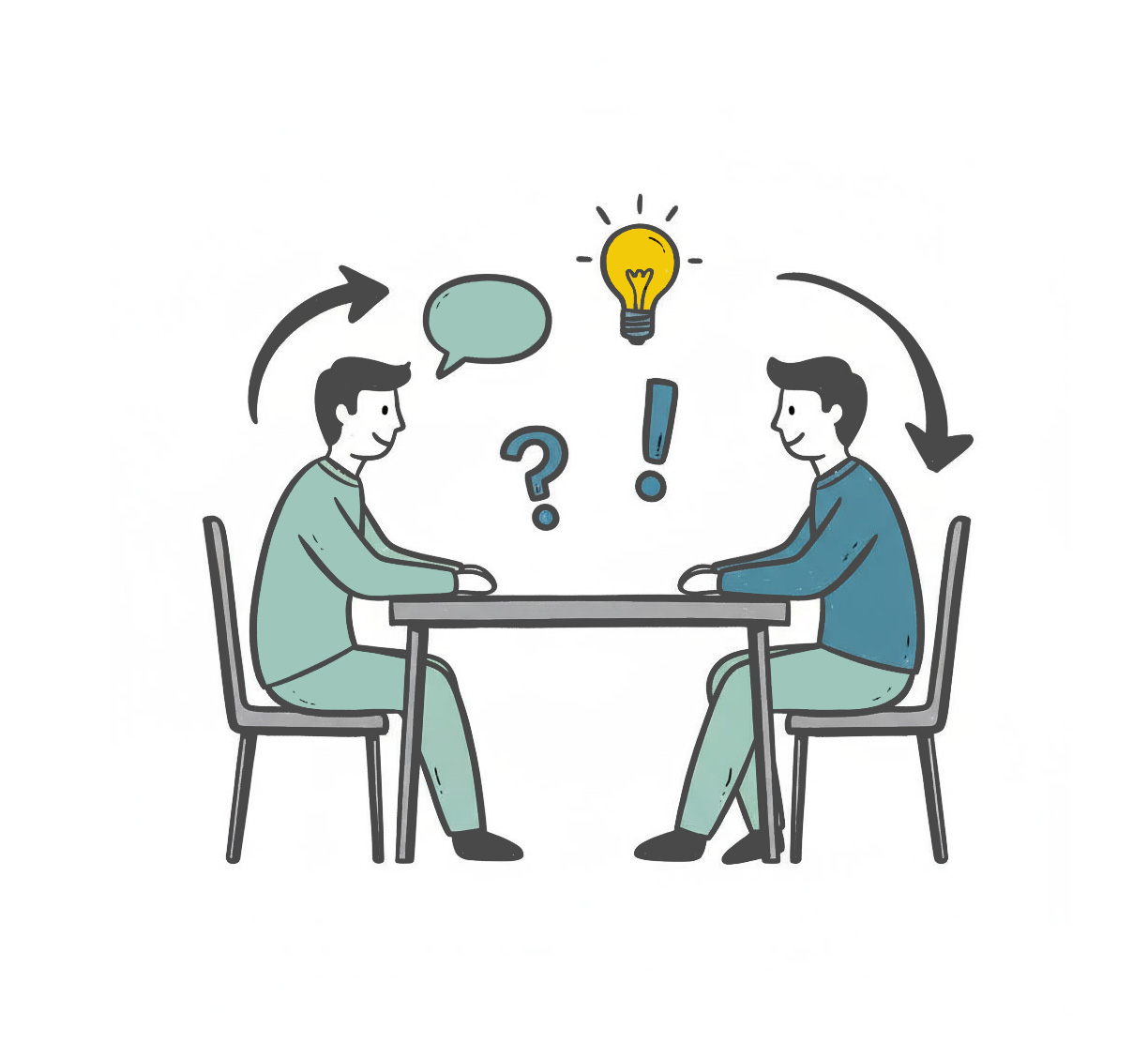
As part of the evaluation (debriefing), the participants then reflect on the situation, speech and actions with the other students, who follow the scenario via video in a live broadcast and contribute to the evaluation process using observation assignments. The debriefing is methodically structured. First, the actors describe the scenario using supporting questions. This is followed by an analysis with the aim of allowing the participants to reflect on and scrutinise their actions, their approach and their behaviour and come to conclusions. The debriefing does not contain any evaluation or feedback, but is aimed at reflection and self-reflection. Teachers are in the role of moderator.
This methodological approach does not correspond to a role play, because the setting and the realisation are implemented in a real, perceived situation and under realistic parameters. Participants regularly say that they are not in an exercise in the scenario, but in the actual situation. Simulative pedagogy makes it possible to incorporate the realism of these measures into the preparation of students for the demands of the labour market, teamwork, interdisciplinary cooperation and the joint development of solutions to practical problems through transfer and application in line with learning objectives.