
Practical example

Inverted classroom concept to improve science practicals (InvertedPrakt)

Teachers
Dr Birgit Hoffmann
Last update
University(s)
Subject group(s)
Target group(s)
Format | Mode

|

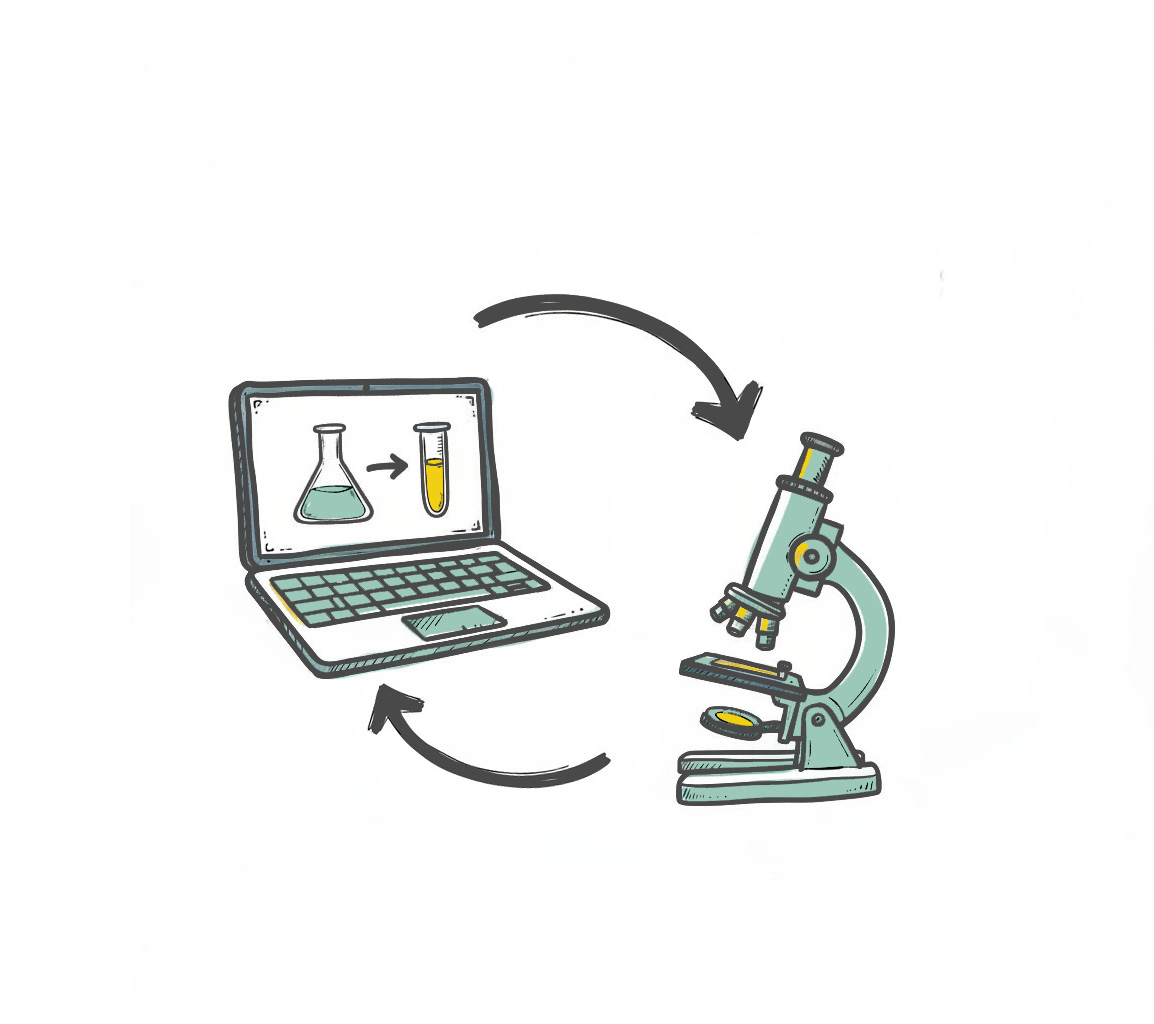
Work placements are a central component of science education. They combine theory with application and support students in acquiring specialised and practical laboratory skills. However, traditional practicals are often time and resource intensive and limited by restricted access to large laboratory equipment. In order to utilise classroom time more efficiently and increase learning effectiveness, a biophysical practical course on fluorescence microscopy was redesigned as part of an inverted classroom approach (InvertedPrakt). Students prepare themselves digitally in advance. The attendance time is used for in-depth, didactically superior tasks. InvertedPrakt thus allows more time for exchange, practice-orientated work and joint active learning in scientific practicals.

The challenge of teaching

In traditional internships, students with very different prior knowledge encounter a standardised learning structure. Nevertheless, the limited attendance time is often used for knowledge tests (antestates) and standardised theory introductions, regardless of the individual learning level. As a result, there is little room for actual laboratory work and skills-orientated learning, which has a negative impact on participation, motivation and deeper understanding.

Goals of your practical example

The InvertedPrakt concept aims to increase the efficiency and learning effectiveness of work placements. By reversing the learning phases, students take responsibility for their own learning process. While they work on the biophysical basics of the practical course at home, the attendance time can be used specifically to work together on the microscope, analyse data and critically discuss results, deviations and errors.

Prerequisites for implementation

The successful implementation of the InvertedPrakt concept required more than just a new structure. It required systematic preparation, time resources, technical infrastructure and participatory design. The development of high-quality digital learning materials (videos and screencasts) required a considerable amount of time and resources, particularly for conceptualisation, filming and post-production. Professional camera technology and audio tools were necessary to ensure clear image and sound quality. In addition, quizzes and comprehension questions were integrated to structure and promote the learning process. The involvement of a student assistant proved to be the key to creating authentic content.

Procedure

Implementation began with an analysis of the previous form of internship. Typical time losses, learning obstacles and inefficient structures were identified. Based on this analysis, digital learning materials were developed to illustrate complex content in a practical and understandable way. A student assistant contributed her own learning perspective, making the learning material more authentic, understandable and motivating. All materials were created in English to enable use in international degree programmes and to strengthen the sustainability of the InvertedPrakt concept. Attendance time has been restructured with a focus on application, problem solving, discussion and critical reflection.
The learning materials are continuously developed on the basis of feedback and adapted to the needs of the students. The concept has a modular structure and can easily be transferred to other science practical courses.

Material for the practical example

Helpful links and sources

Your suggestion or question

We hope that the practical examples will be viewed critically, utilised and developed further and thus remain alive. Therefore, please use the comment function to give your assessment of this practical example. Share your experiences in the implementation or refer to similar didactic methods (please include references or links). 

Your assessment will first be checked by us and then approved.

Leave a Reply

Your email address will not be published. Required fields are marked *

Contact person for the teaching concept

Bild von Claudia Hoffmann

Claudia Hoffmann

Contact us

Selection of topics