Practical example

Digital Burnout - Photography, AI and digital platforms: Teaching image practices in the algorithmic age

Teachers
Prof Dr Birgit Wudtke, Julia Albrecht & Anika Meier P
Last update
University(s)
Subject group(s)
Target group(s)
Format | Mode

|

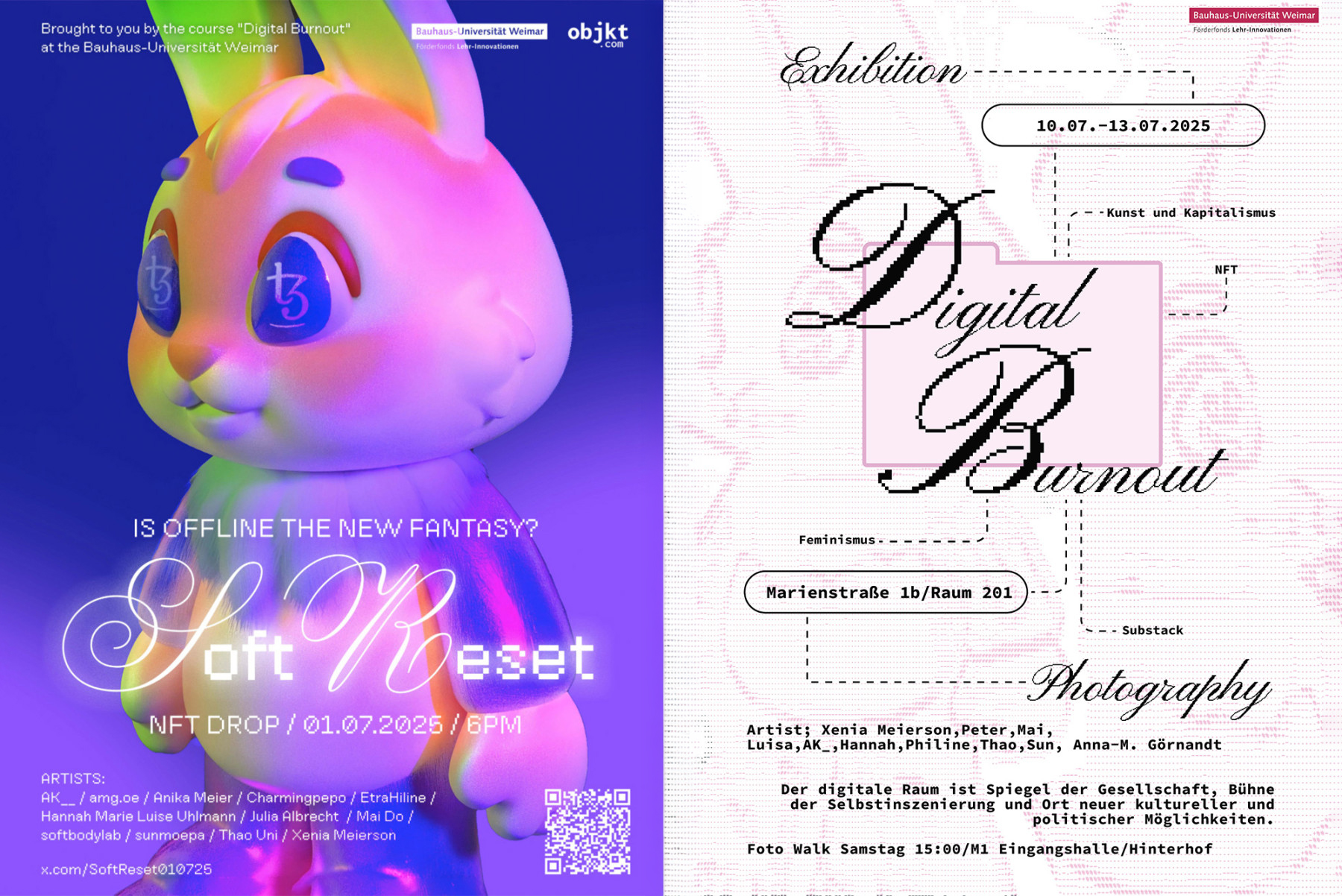
In the summer semester of 2025, a practice-oriented teaching concept was trialled as part of the „Digital Burnout“ project module, which linked photography, artificial intelligence and digital platforms. The starting point was the assumption that digital space is not only a technical environment, but also a place characterised by power relations in which visibility, identity and value are negotiated. The aim was not only to analyse this space theoretically, but also to actively use it as an artistic and experimental space for action.

The teaching format combined hybrid teaching, flipped classroom and tandem teaching with curator Anika Meier, who provided practical insights into digital art, NFTs and the art market. The students worked continuously on their own projects and used real platforms such as Substack, Instagram and an NFT platform to publish their work and reflect on its impact in the digital space. In addition, online instructional videos were available that taught the basics of AI applications, their history and ethical issues and served as a basis for practical work.

A central component was the close integration of theory and practice: content from the educational videos and discussions was translated directly into artistic experiments. The students developed individual positions between analogue photography, AI-generated images and digital forms of distribution. The work was jointly reflected upon and developed further in regular feedback formats.

The excursion to Berlin was another important practical component. During the Gallery Weekend, the students gained insights into current artistic and curatorial positions, including a studio visit to Anna Ehrenstein and a visit to her exhibition. These experiences made it possible to deepen and critically scrutinise the topics covered in the seminar in direct exchange with artistic practice.

The project showed how the combination of digital tools, artistic practice and real platform structures can create a learning space in which students not only acquire skills, but also develop their own positions within digital image cultures.
The challenge of teaching

Goals of your practical example

- Develop a critical and reflective attitude towards AI, digital platforms and algorithmic image production
- Combination of theoretical knowledge and artistic practice in a continuous working process
- Strengthening independent artistic positions in the field of tension between analogue and digital image culture
- Teaching skills in the use of current digital tools (AI, social media, NFTs)
- Understanding digital platforms as production, distribution and power structures
- Promotion of collaborative working methods through tandem teaching and joint project development
- Sensitisation to questions of visibility, identity, authorship and digital economy
- Testing new teaching formats to actively involve students

Prerequisites for implementation

- Basic knowledge of photography or visual design
- Openness in dealing with digital tools and experimental working methods
- Willingness to actively participate in discussions, feedback formats and collaborative processes
- Access to digital end devices (laptop/smartphone) and internet for working with AI tools and platforms
- Use of an online platform (e.g. Moodle) as a central course basis for materials, communication and organisation
- Use of platforms such as Substack, Instagram or NFT platforms as part of the learning process
- Interest in theoretical questions on AI, media culture, feminism and digital power structures
- Willingness to present and reflect on your own work in public

Procedure

The approach followed a process-orientated, iterative structure. Even before the course began, key content was recorded in the form of online teaching videos and made available on the teaching platform (e.g. Moodle) together with all relevant materials so that students could prepare themselves independently.

The seminar itself focussed on practical application: initial ideas were tested in short experimental tasks and further developed into individual projects over the course of the semester. Regular feedback formats in the group enabled continuous reflection and further development of the work.

The work process was organised in phases that alternated between exploration, consolidation and presentation. External impulses from workshops and excursions were specifically incorporated and integrated into the project development. The result was an open learning process based on independent work, exchange and the gradual development of artistic positions.

Material for the practical example

Your suggestion or question

We hope that the practical examples will be viewed critically, utilised and developed further and thus remain alive. Therefore, please use the comment function to give your assessment of this practical example. Share your experiences in the implementation or refer to similar didactic methods (please include references or links). 

Your assessment will first be checked by us and then approved.

Leave a Reply

Your email address will not be published. Required fields are marked *

Contact person for the teaching concept

Bild von Claudia Hoffmann

Claudia Hoffmann

Contact us

Selection of topics