Teaching practice from the Thuringian universities
Overview of practical examples
Are you looking for a suitable didactic method? Would you like to find a concept or practical example that has been tried and tested by teachers? Or be inspired by the variety of practical examples and teaching/learning concepts?
There are several options available to you: Use the step-by-step filtering to make the right selection. You can use the keyword search to gain an overview of all subject groups. The full text search will take you to specific search results.
You will find related examples for each practical example on the detail page. You are also welcome to be guided by our recommendations of the current Top3.
The project developed three self-study units with Articulate Rise that guide students to systematically reflect on their experiences from service learning and their knowledge of social work fields. The aim is to overcome superficial reflections and encourage students to ...
In the project „Interdisciplinary innovation in energy research - further development of a module into a cross-university course“, the course Energy Research and Innovation Methods 2 at the TU Ilmenau was to be further developed into a cross-university course. This practical example describes what is involved in the ...
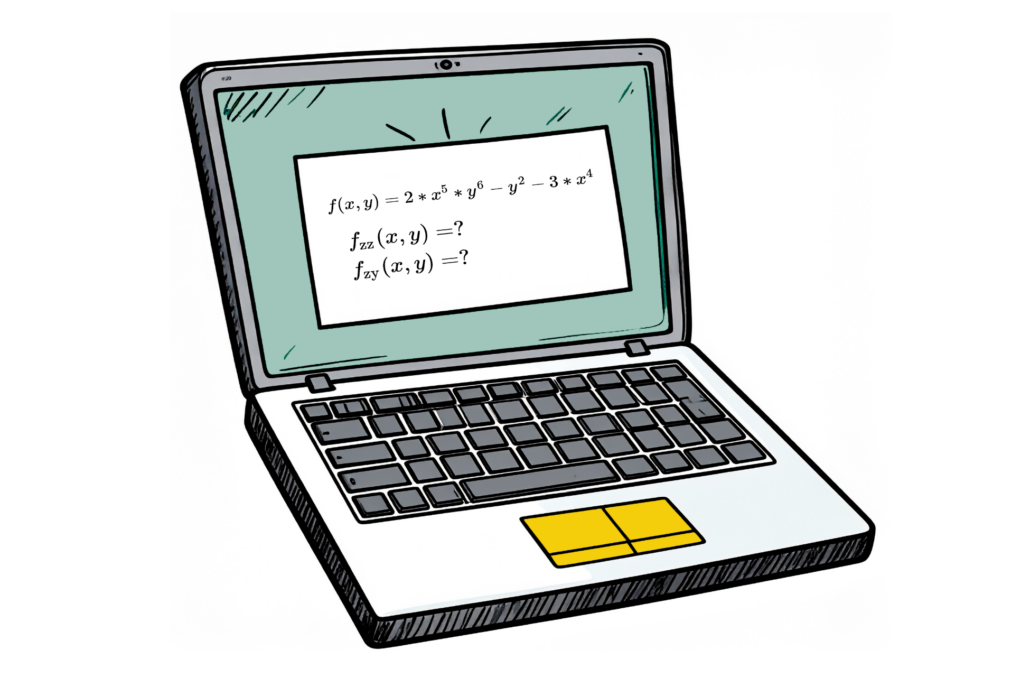
The Mathematics and Statistics module is offered as a basic module for the Business Administration (B.A.) degree programme. To prepare students for the individual face-to-face exercises, exercises are provided as exercise series for independent practice in the Moodle learning management system. These are linked to ...
In the seminar, prospective teachers deal with basic concepts of media education, media didactics and media-related school development. Seven self-study courses are used for the initial transfer of knowledge, followed by on-site sessions for discussion and experimentation. The combination of self-learning ...
The course "genKI-Führerschein - ChatGPT und Co. im Studium sicher einsetzen" is an approx. 60-minute self-study course in German and English on the Virtual Campus Thuringia. It teaches the basics of how generative AI works, the opportunities and risks involved and the rules for ...
The Master's seminar focuses on a mission design for autonomous systems (e.g. robots, probes) according to a given objective. Ideally, it is motivated by national/ international tenders or competitions, e.g. REXUS/ BEXUS of the DLR. The core is the project planning for the realisation of the system ...
The "Scientific Instrumentation" degree programme has a relatively large student cohort of 90-115 students. In order to enable all students to work with the scanning electron microscope (SEM) in the "Physical Materials Diagnostics" module, the implementation as an online practical course (a solution from ...
Peer instruction units are short units lasting approx. 10 minutes that are carried out once or several times during a lecture. The starting point is a multiple-choice question that is addressed to the students via the projector. Typically, this is a comprehension question about the ...
Podcasts have been known in the media landscape for many years and have once again come to the fore in the context of the pandemic. With the task of creating podcasts, the development of students' skills takes centre stage, allowing them to develop independent and creative ways of working on projects.
Before the start of every chemistry lab course, students are required to attend a mandatory safety briefing. With the help of an additional online-supported self-study course, the time in the laboratory can be used more effectively, while at the same time more in-depth information can be imparted asynchronously. The self-study course was developed for the learning management system ...
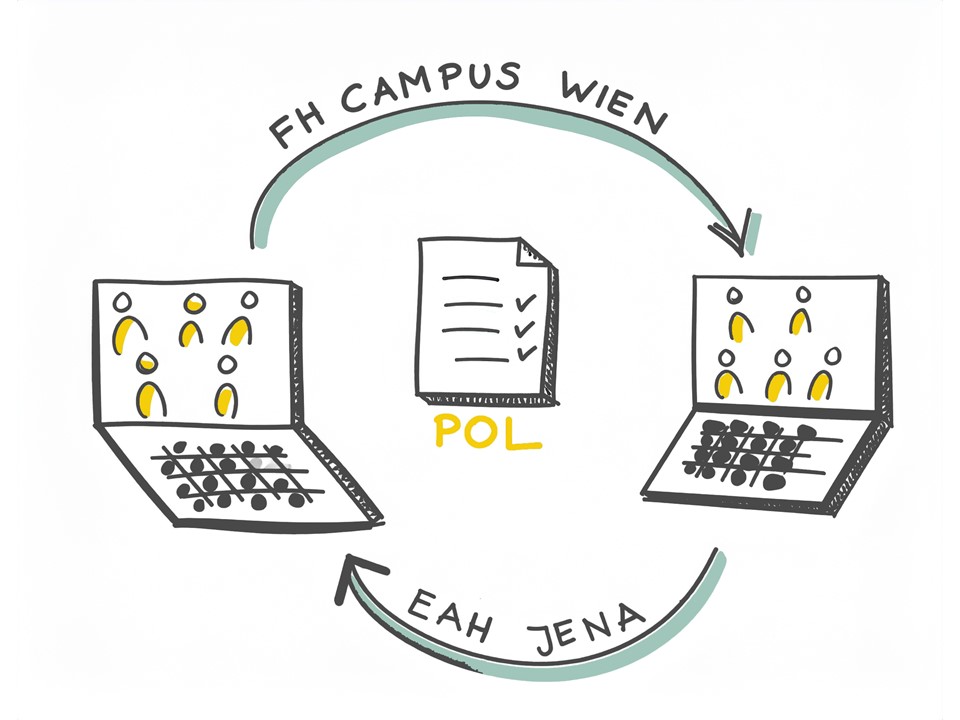
Together with the FH Campus Wien, a three-hour seminar unit was developed for purely digital implementation in the field of health and care. The basis is the Problem-Oriented Learning (POL) method, so that students can successfully transfer theoretical knowledge into practical knowledge. The method ...
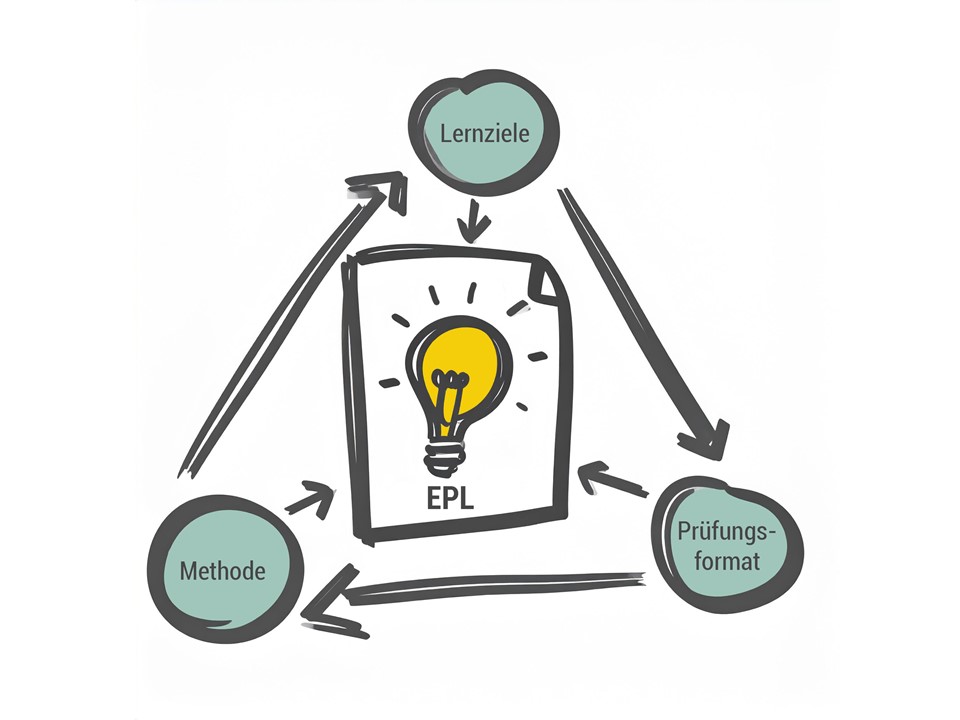
The EPL method is described in detail in (Wieczorek and Ulrich 2022). It is based on the "classic" constructive alignment, but implements it systematically per learning unit (labelled as an event), per individual learning objective. This should lead to a high level of transparency with regard to the ...
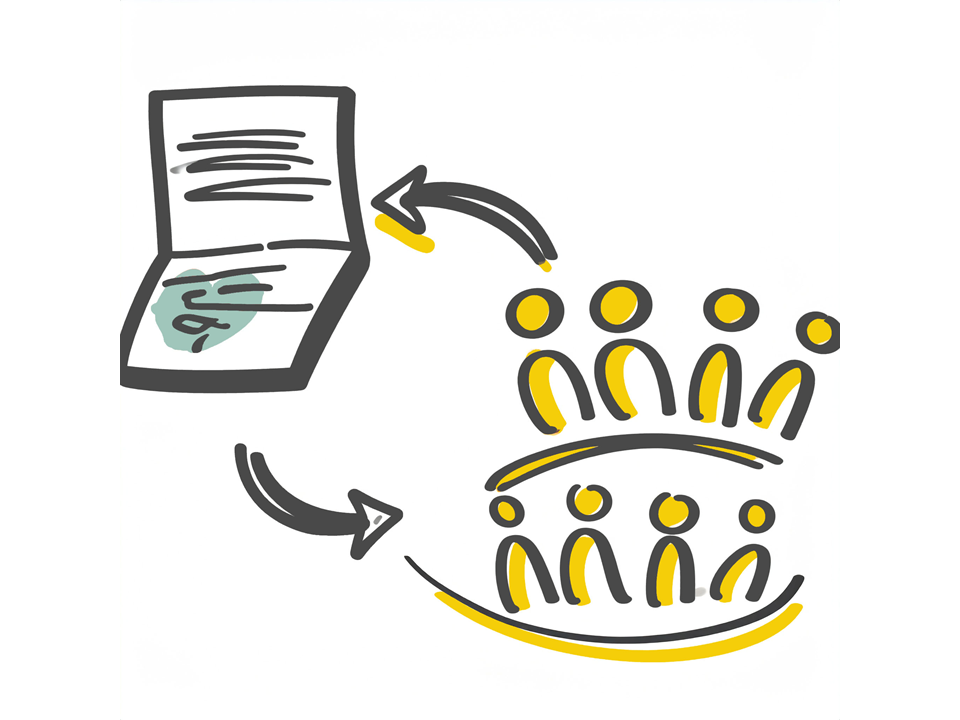
The basics of various related disciplines are taught at the beginning of the social work degree programme. Among other things, students are familiarised with sociological issues, learn theoretical concepts and apply these to practical issues in various fields of social work. With the help of the flipped classroom concept ...
Learning content is conveyed to students by means of short video films (3-10 minutes long). Detailed description Topics are taken up from the lecture or on request. The learning videos serve to support and supplement what has already been learnt or to make content available online.
Screencasts or slidecasts (screen videos) give students the opportunity to watch the lecture or seminar content as often as they like and at their own pace, and to acquire the knowledge presented independently of lecture times and lecture theatres. This method is therefore ideal for self-study. ...
For the first course of a new semester, it is advisable to set out clear rules, i.e. the "rules of the game" for the entire course for about 14 weeks. An elementary part of these rules is the clarification of how to deal with each other. Communication, dealing with disruptions (from ...
In order to familiarise students with the principles of programming, they should be given the opportunity to implement examples themselves. In this concept, this idea is consistently pursued right up to the examination. Based on a specialised case (example: warehouse management, container port and other logistics topics) ...
Even the communication of a teacher's understanding of their role can make a decisive contribution to a learner-orientated form of academic education. In the role of a learning coach, a learning facilitator, the teacher hands over part of their responsibility to the students. From now on, it is their task to ...
The project developed three self-study units with Articulate Rise that guide students to systematically reflect on their experiences from service learning and their knowledge of social work fields. The aim is to overcome superficial reflections and encourage students to ...
In the project „Interdisciplinary innovation in energy research - further development of a module into a cross-university course“, the course Energy Research and Innovation Methods 2 at the TU Ilmenau was to be further developed into a cross-university course. This practical example describes what is involved in the ...
The Mathematics and Statistics module is offered as a basic module for the Business Administration (B.A.) degree programme. To prepare students for the individual face-to-face exercises, exercises are provided as exercise series for independent practice in the Moodle learning management system. These are linked to ...
In the seminar, prospective teachers deal with basic concepts of media education, media didactics and media-related school development. Seven self-study courses are used for the initial transfer of knowledge, followed by on-site sessions for discussion and experimentation. The combination of self-learning ...
The course "genKI-Führerschein - ChatGPT und Co. im Studium sicher einsetzen" is an approx. 60-minute self-study course in German and English on the Virtual Campus Thuringia. It teaches the basics of how generative AI works, the opportunities and risks involved and the rules for ...
The Master's seminar focuses on a mission design for autonomous systems (e.g. robots, probes) according to a given objective. Ideally, it is motivated by national/ international tenders or competitions, e.g. REXUS/ BEXUS of the DLR. The core is the project planning for the realisation of the system ...