
Thinking digital education together
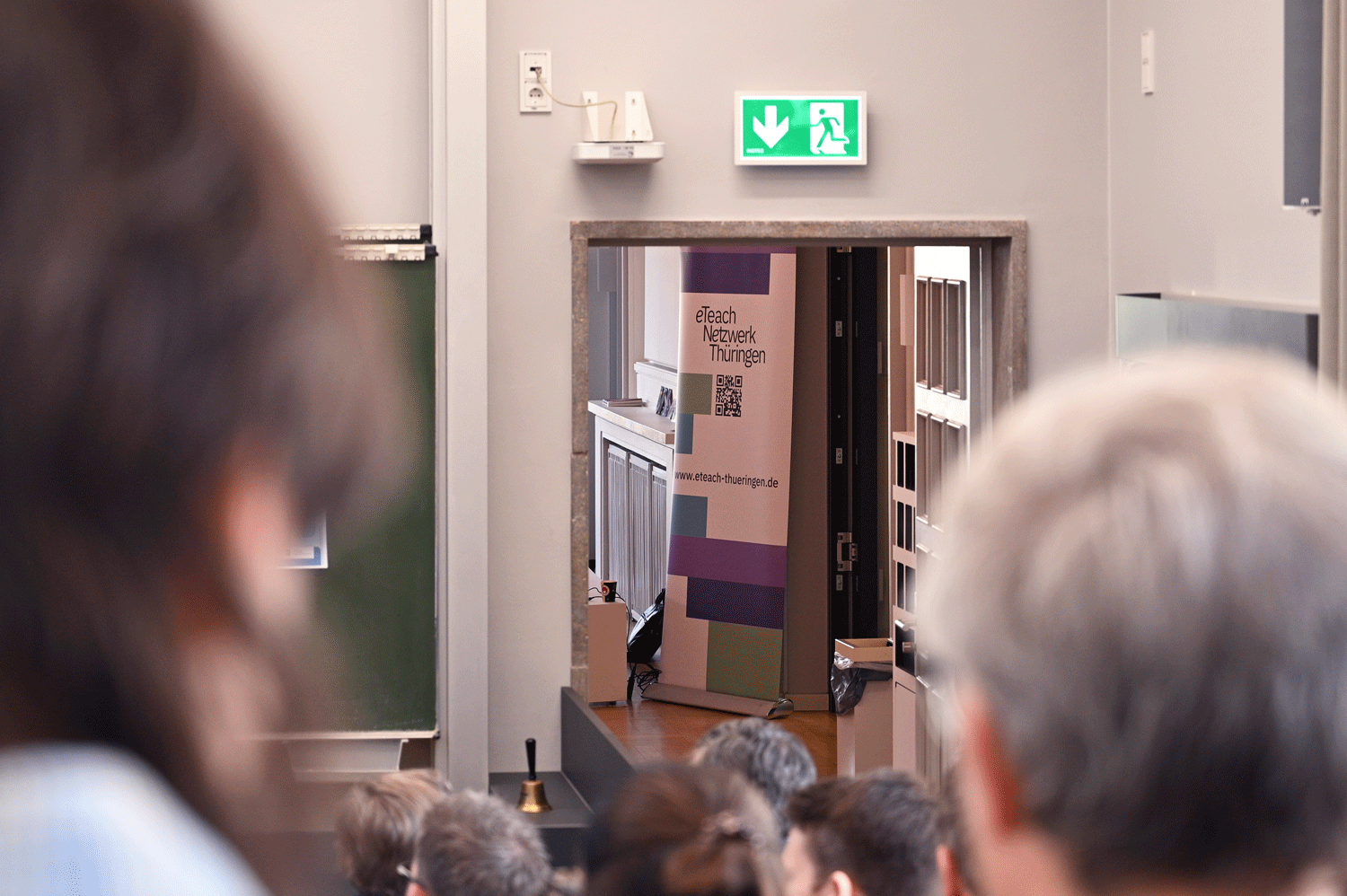
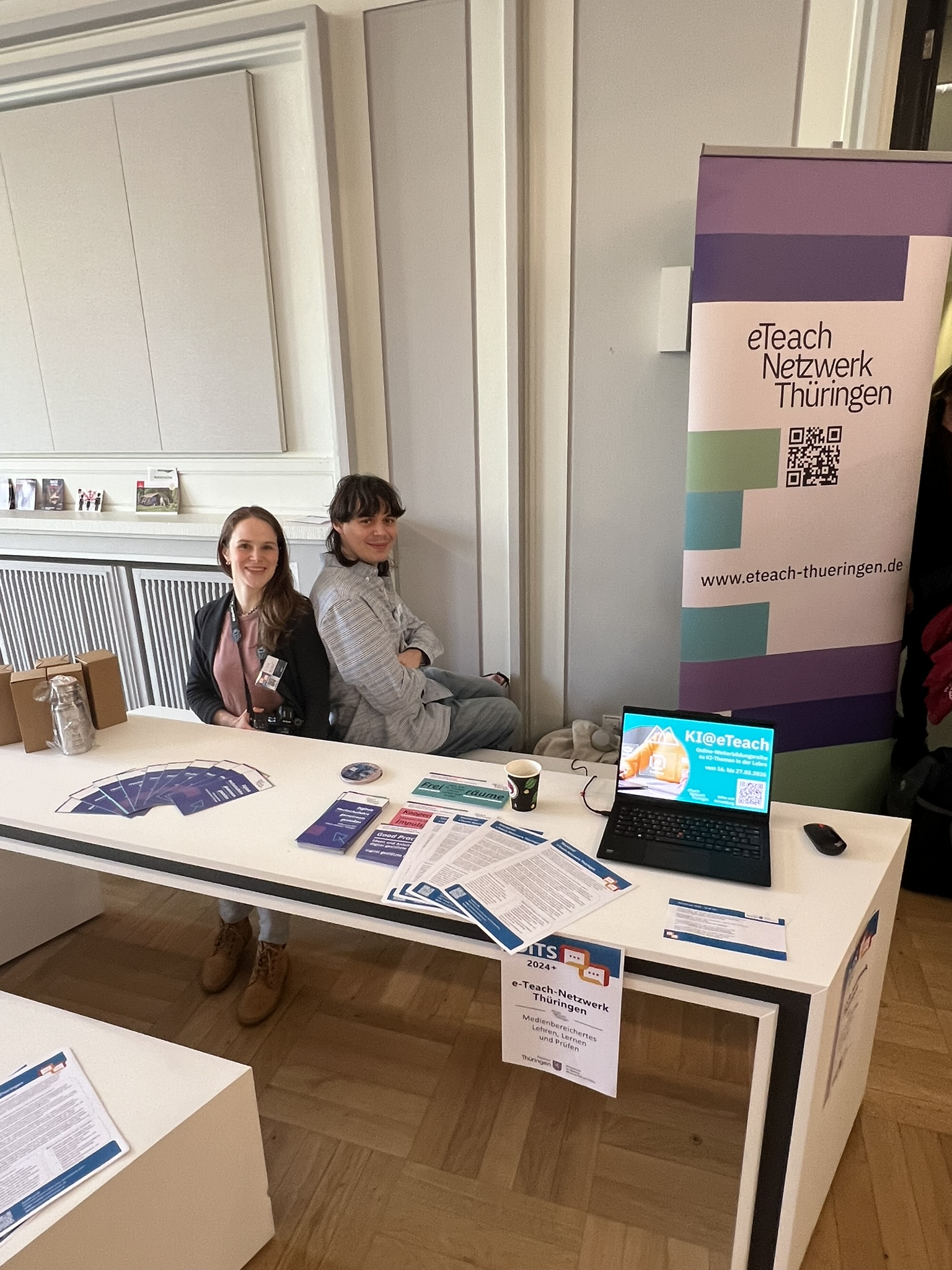
Yesterday afternoon, the starting signal was given at the University of Erfurt for the further development of the Thuringian Schools 2024+ digital strategy. The event was organized by the Thuringian Ministry of Education, Science and Culture (TMBWK) and the Thuringian Institute for Teacher Training, Curriculum Development and Media (ThILLM). Numerous stakeholders from schools, science, administration and educational projects came together to discuss perspectives for the digital transformation of the school system in Thuringia. The eTeach Network Thuringia was also represented at the event to present its services to support digital university teaching and to network with partners from the field of school media education.
Networking as the key to media education
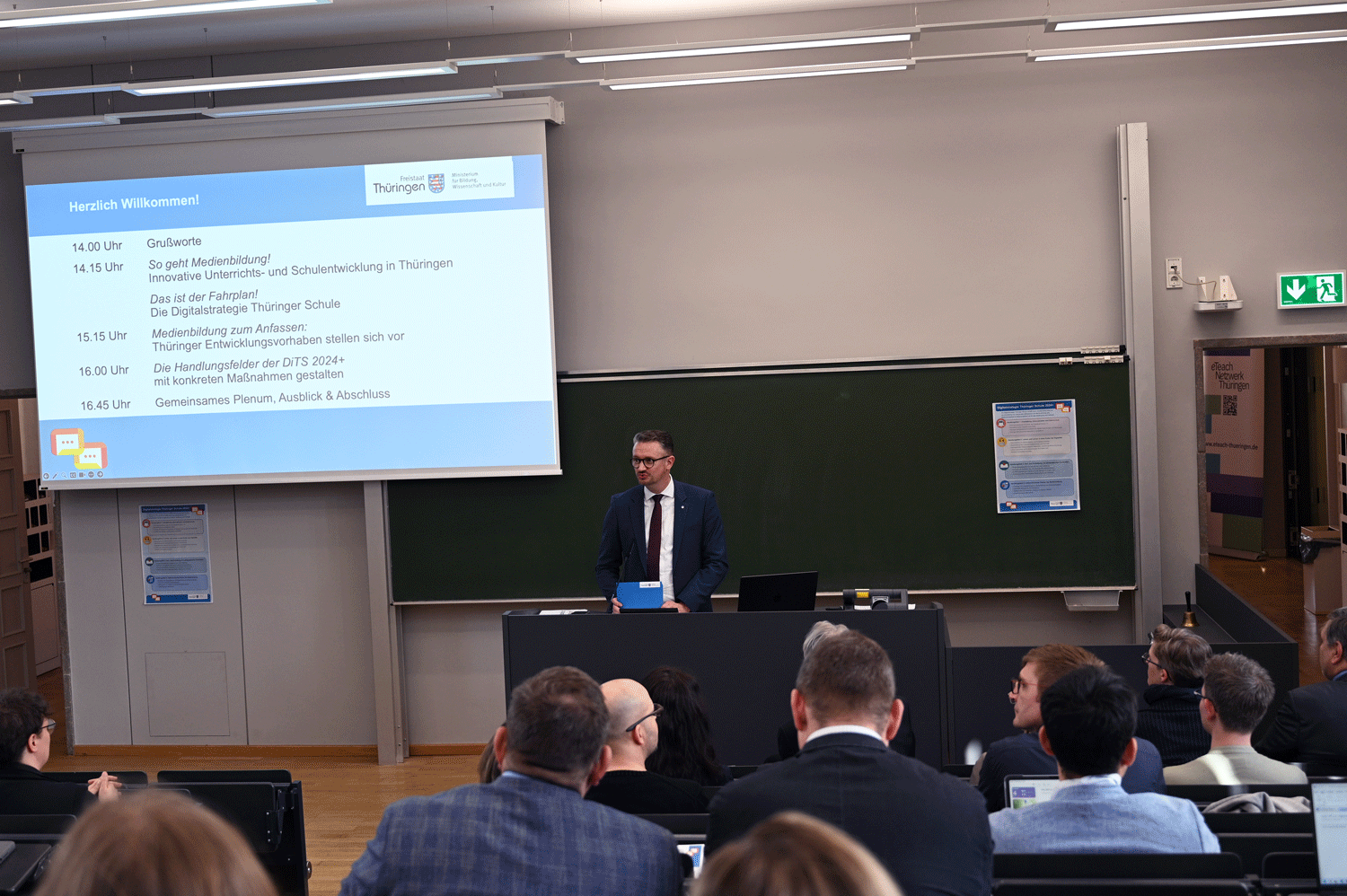
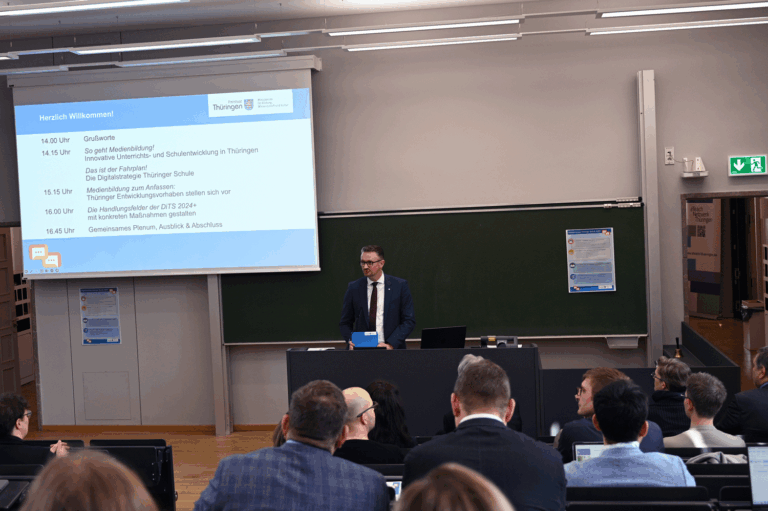
It was already clear in the welcoming speeches that digitalization is to be further strengthened as a central cross-cutting topic in the education sector. Education Minister Christian Tischner particularly emphasized the importance of sustainable structures: in addition to the continuation of the Digital Pact funding, a separate department for digital education will strengthen the link between theory and practice. At the same time, the introduction of a subject for media studies and media education was highlighted as an important step.
Walter Bauer-Wabnegg, President of the University of Erfurt, also emphasized the importance of a strong network, as media skills can only be developed through interaction between stakeholders from schools, universities, science, culture and educational practice. The role of the eTeach network, which works at the interface between university didactics, digital teaching and educational innovation, is particularly evident here.
Best practice examples from Thuringian schools
A special item on the agenda were four practical reports from Thuringian schools that are already taking innovative approaches to digitalization.
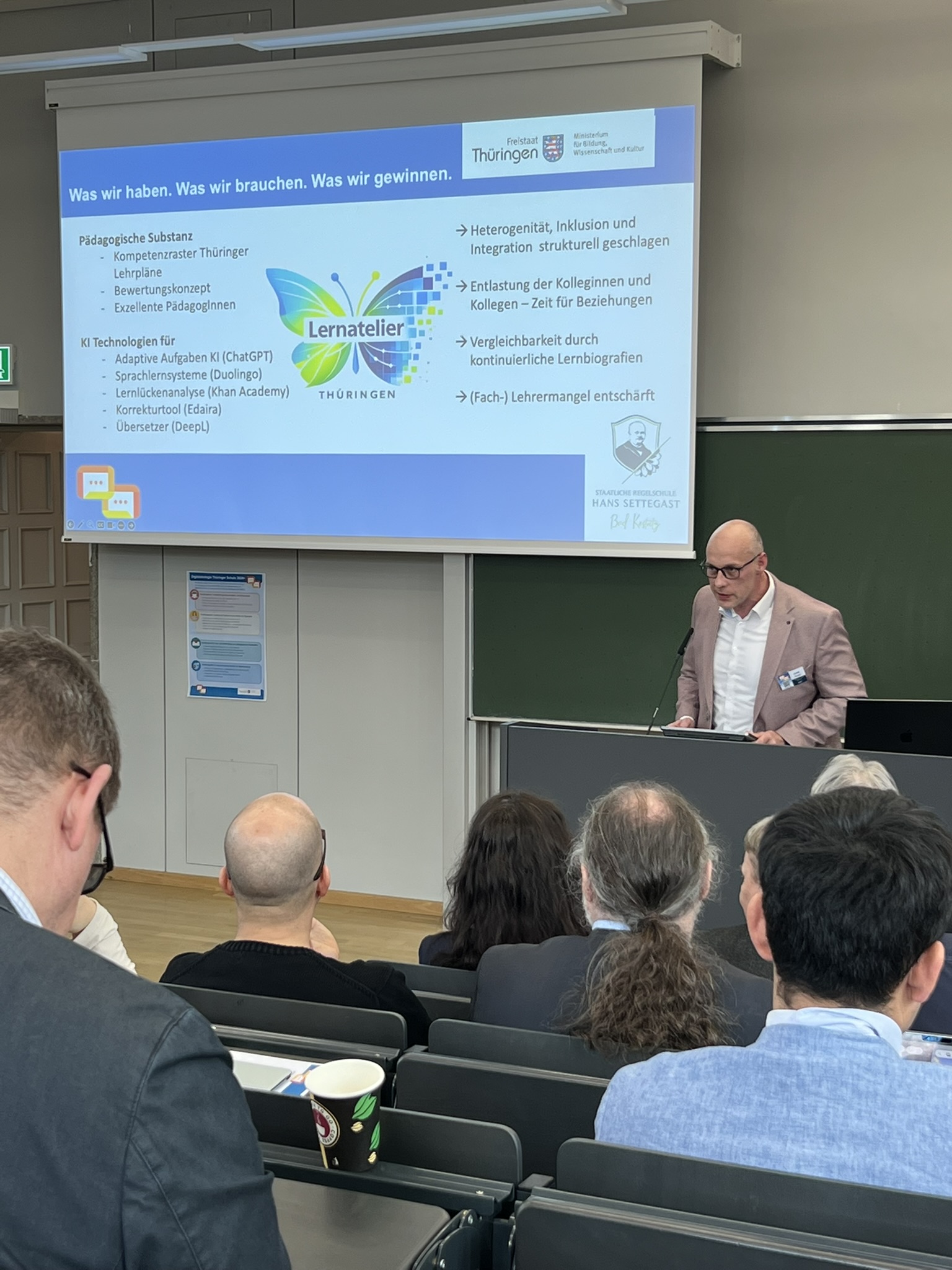
Maik Poser, head of the „Hans Settegast“ regular school in Bad Köstritz, presented a school concept that focuses on self-organized learning in so-called learning studios. Pupils work at individual workstations using skills grids. Teachers increasingly act as learning guides, while materials are provided digitally via an app. Teaching and learning are thus more strongly decoupled from each other and supplemented by regular coaching sessions.
Matthias Grywatsch from the Unstrut-Hainich vocational school campus in Mühlhausen also emphasized that technology alone is not enough. Although digital platforms, tablets and digital whiteboards have improved communication with learners and reduced lesson absences, acceptance among the teaching staff and a reliable technical infrastructure are crucial. For the future, he would like to see more training courses for teachers in particular.
Another example was presented by Mike Noack from Rhön-Gymnasium Kaltensundheim. There, iPads are used specifically in lessons, supported by a clearly defined set of standard apps. At the same time, learning islands have been created and parents are actively involved in school development. Particularly innovative: so-called iPad buddies, i.e. pupils who support their classmates and teachers with technical questions.
Finally, Christina Weise, head of the state vocational school Karl-Volkmar-Stoy-Schule Jena, emphasized the importance of future skills and AI skills to prepare young people for an increasingly digital working and living environment. This requires continuous training, digital licenses for learning platforms and a school culture in which teachers see themselves more as learning guides.
The practical examples made it clear how diverse digital school development can already be today - from new learning space concepts and digital tools to changing perceptions of the roles of teachers and learners. At the same time, these approaches open up exciting Starting points for university teaching. Topics such as self-organized learning, competence-oriented teaching design, digital learning platforms or the role of teachers as learning guides are also central issues in university didactics.
This exchange provides valuable impetus for the eTeach network in Thuringia. As a state-wide network for the promotion of digitally supported university teaching, eTeach supports teachers in the development of innovative teaching and learning formats and promotes the exchange of good practice. The school concepts presented show that many challenges, such as the promotion of self-learning skills, the sensible use of digital tools or the qualification of teachers, affect school and university education in equal measure. Formats such as the strategy kick-off therefore create important spaces for combining perspectives from schools and universities and learning from each other.
Working together on the digital strategy
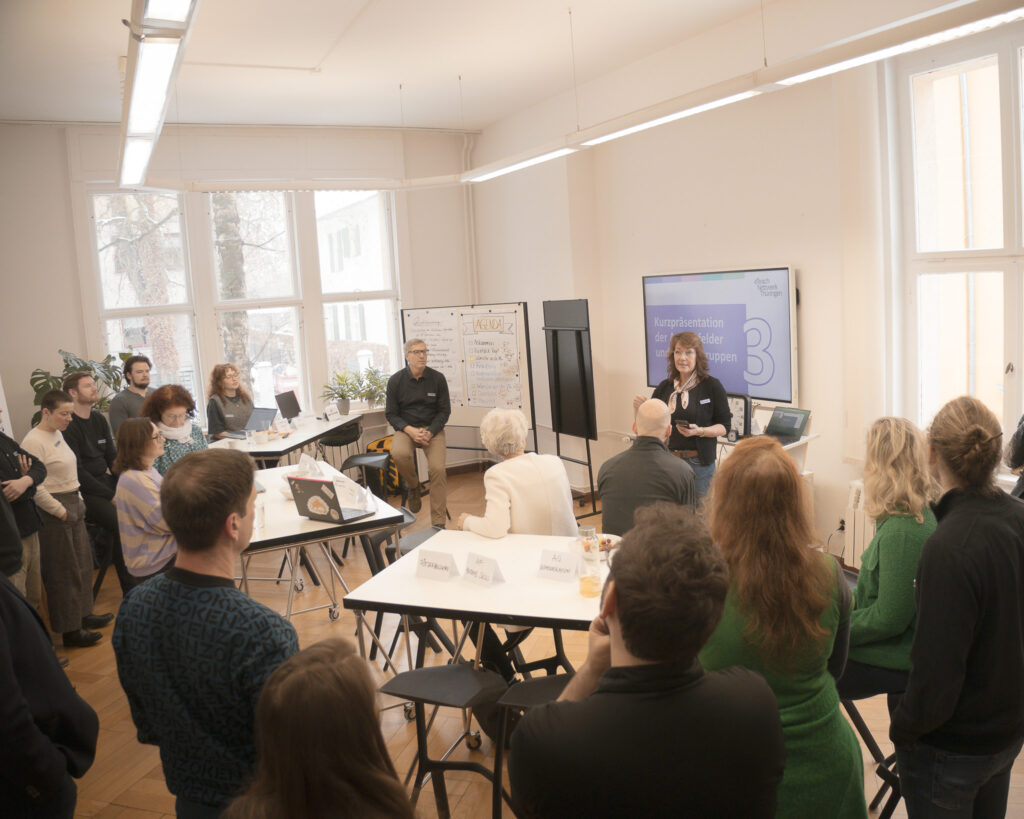
Following the impulses, the participants worked together on central questions of the digital strategy. The focus was on four fields of action:
- Equipment, administration and data protection
Among other things, a country-specific evaluation of the technical infrastructure and its sustainable support was discussed. - Teaching and learning in a culture of digitality
The focus here was on the further development of framework plans and competency models, the revision of curricula for media education and computer science as well as topics such as distance learning, AI applications and the promotion of resilience and conscious digital time-outs. - Teacher training and further training
New roles such as a „school coordinator for media education“, demand-oriented further training courses and, in the future, a course of study in the field of media education for teachers were considered. - Extracurricular partners and contexts of media education
Cooperation with external partners, competitions and specialist days are intended to strengthen creative approaches to media education.
Exchange with numerous educational stakeholders
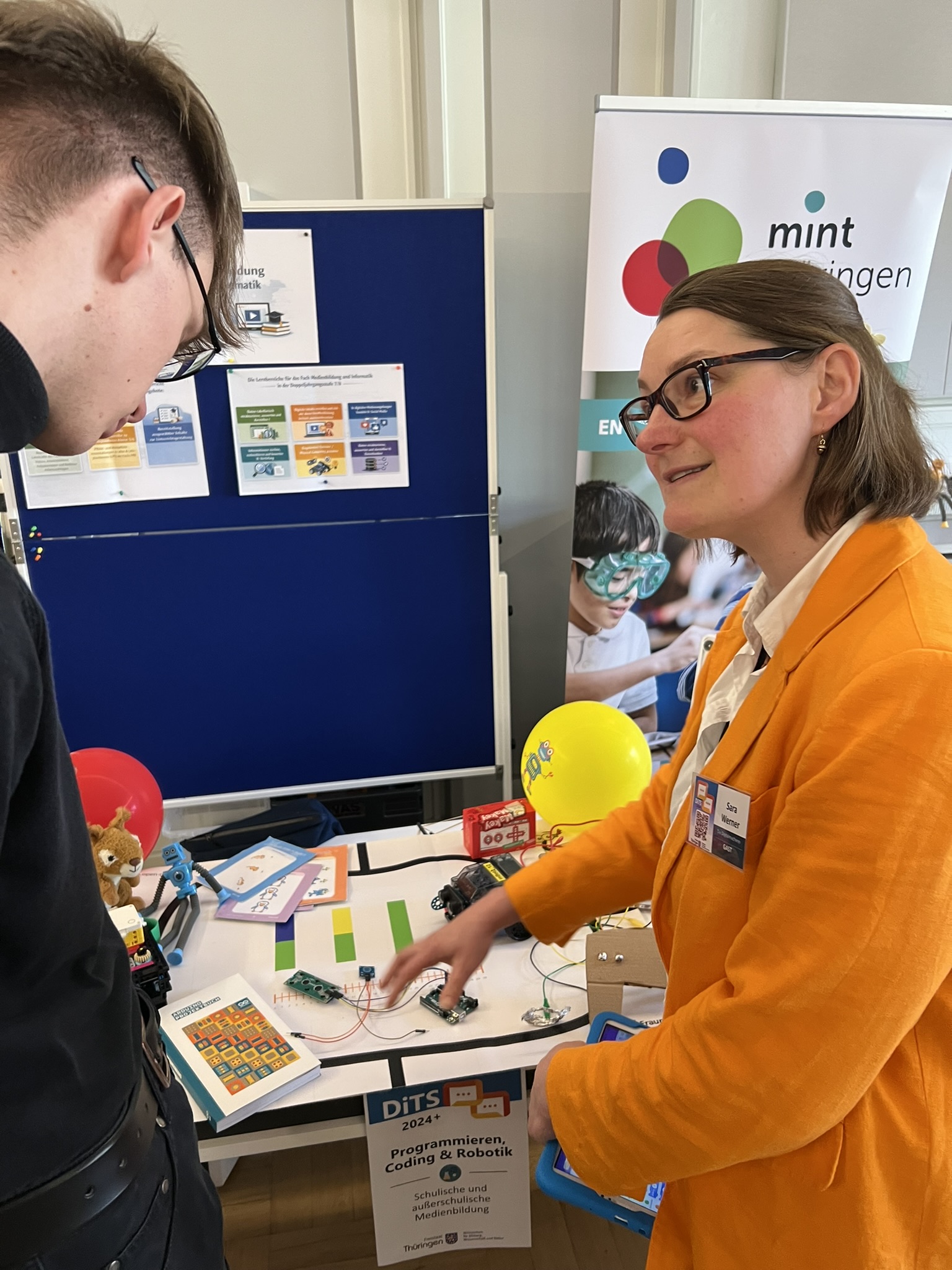
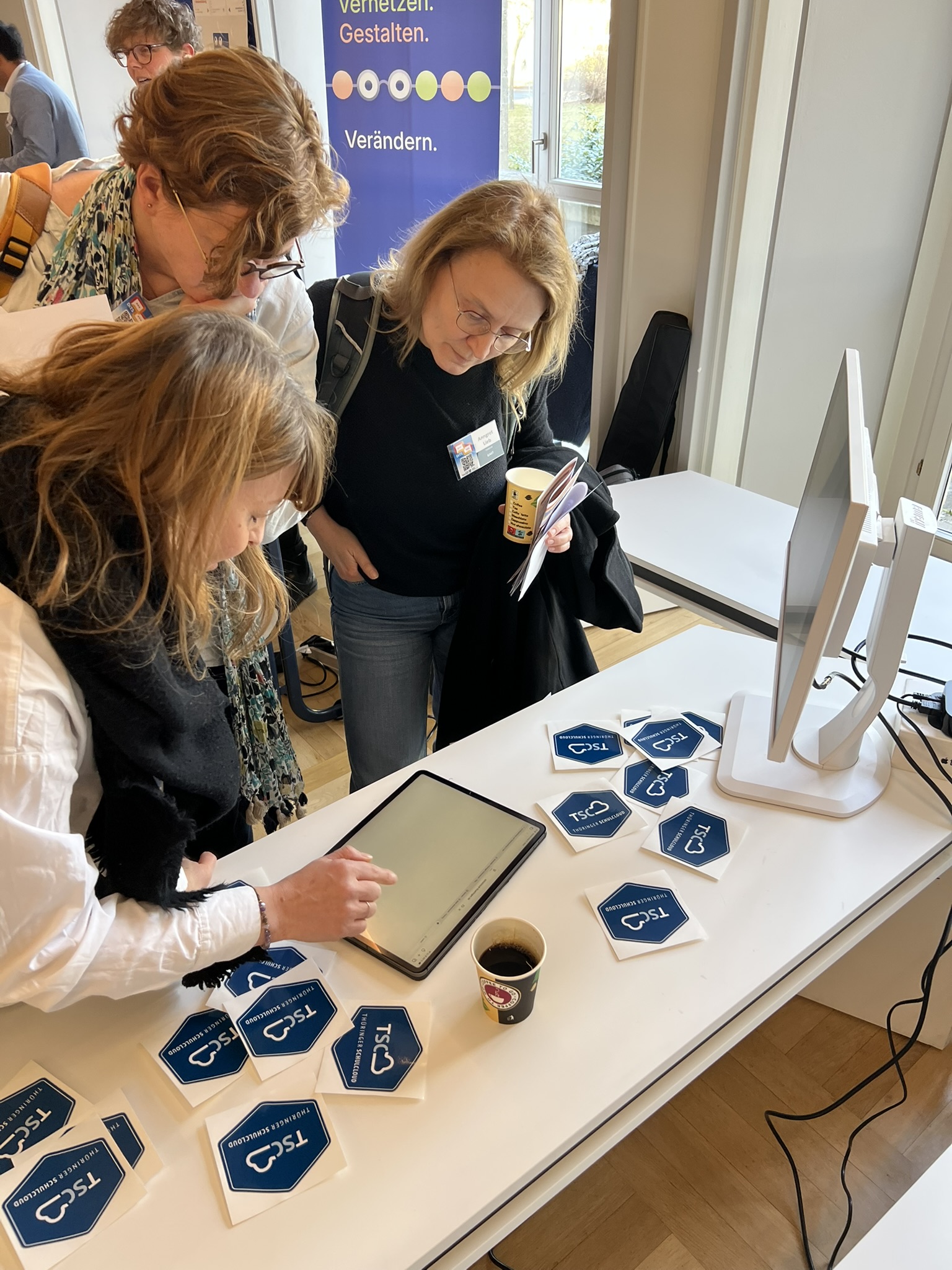
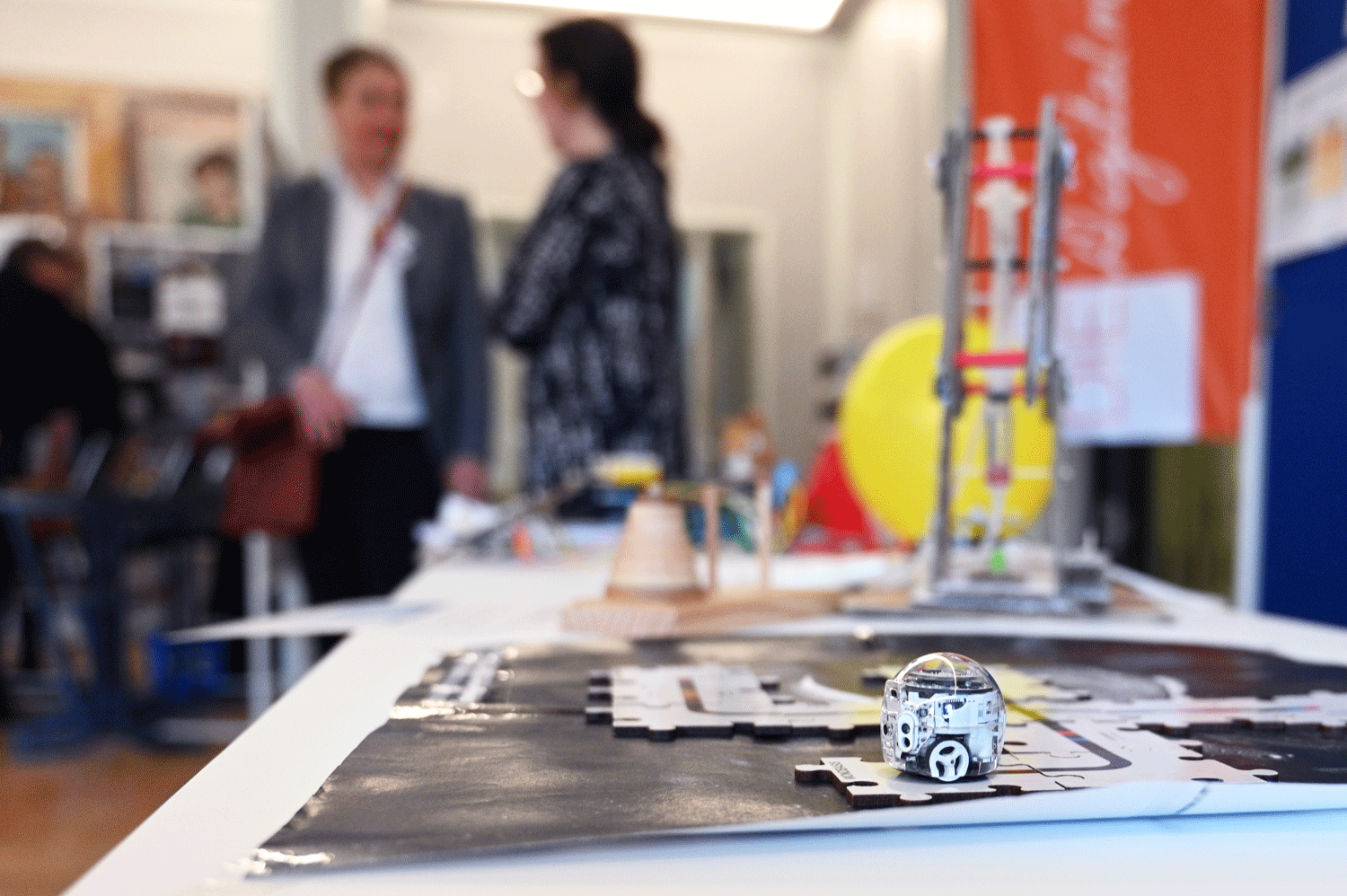
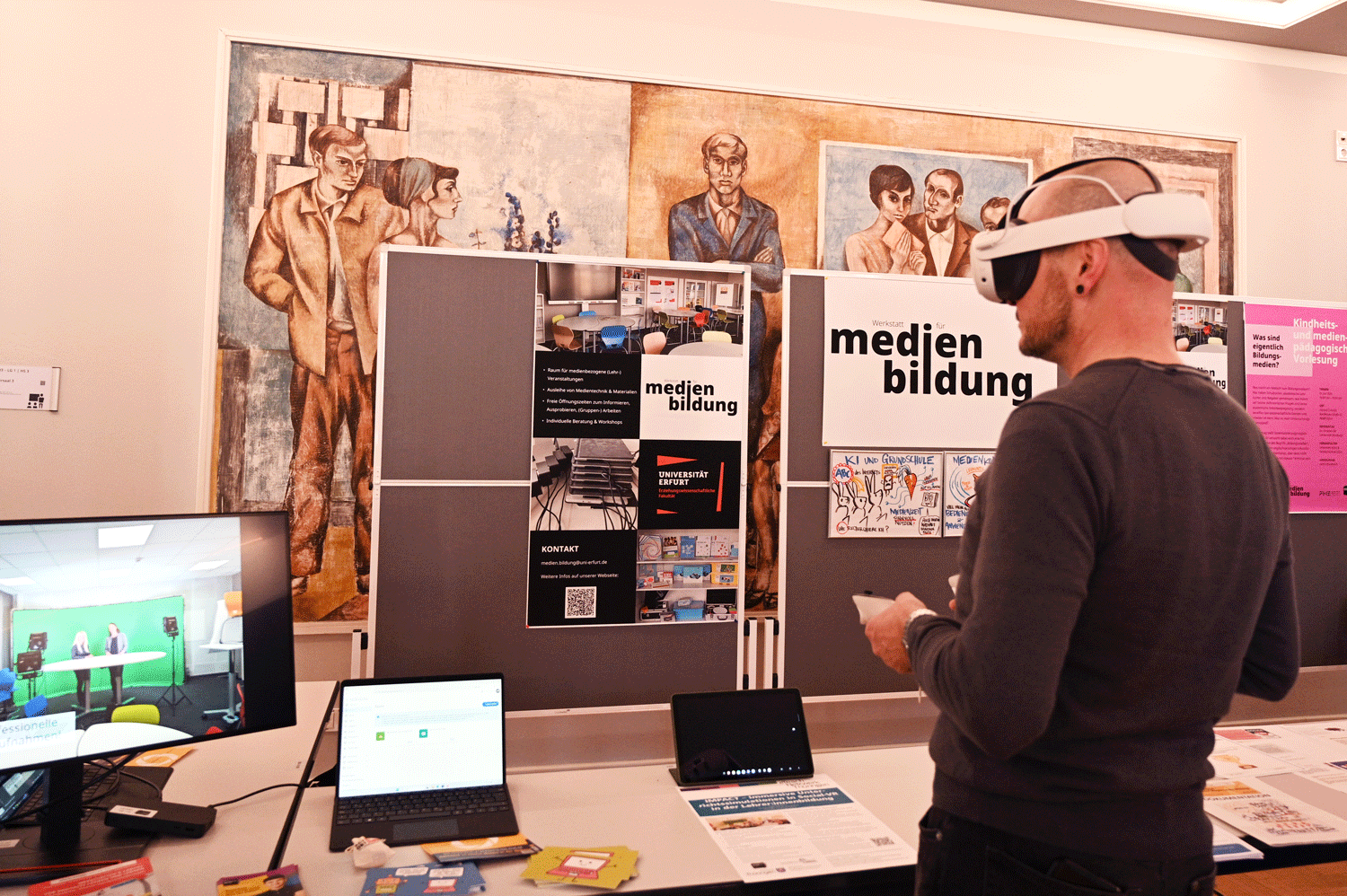
In addition to the eTeach network, many other initiatives and projects were represented, including the Thuringian school cloud, the workshop for media education at the University of Erfurt, the AI chatbot project telli, the Digitalmacherei with offers on programming, coding and robotics as well as the TMBWK's Strategic Media Education department. The intensive exchange between school and non-school partners made it clear how important cooperation is for the successful implementation of digital education.
Role of the eTeach network
For the eTeach network, the event offered a valuable opportunity to gain insights into current developments in school media education and at the same time to contribute its own perspectives from university teaching. There are numerous points of contact for future cooperation, particularly in the area of teacher training and the qualification of teachers at universities.
The event made it clear that the digitalization of education is not just a question of technical equipment. Above all, networking, qualification and a shared vision for teaching and learning in a culture of digitality are crucial. The kick-off event in Erfurt provided an important impetus for this.